

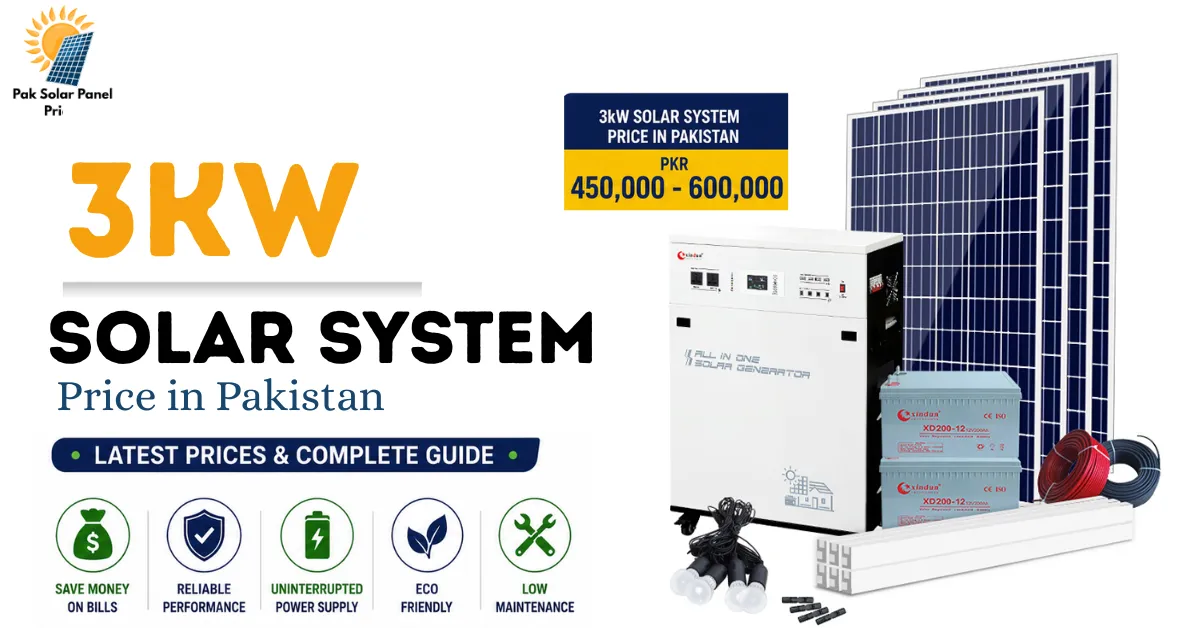
3kW Solar System Price in Pakistan 2026 – Complete Cost Breakdown, Components & Monthly Savings
A bigger solar power plant isn’t needed for every household. For smaller and medium-size families, a 3kW solar system is the perfect combination of efficiency and cost-saving. It has enough capacity to provide energy for necessary household devices and reduce monthly electricity bills. Due to high tariffs for electricity and the availability of highly efficient solar products, 3kW solar plants are one of the most popular options in Pakistan.
If you are going to install a solar plant connected to the grid, hybrid, or off-grid system, you will need to know the price, quality of components, and potential electricity production.
Read More: 5kW Solar System Price in Pakistan 2026 – Latest Price & Installation Cost
Read More: 10kW Solar System Price in Pakistan 2026 – Latest Price List
How Much Does a 3kW Solar System Cost in Pakistan?
The total cost depends on the type of inverter, solar panels, mounting structure, wiring, batteries (if required), and installation charges.
| System Type | Estimated Price (PKR) |
|---|---|
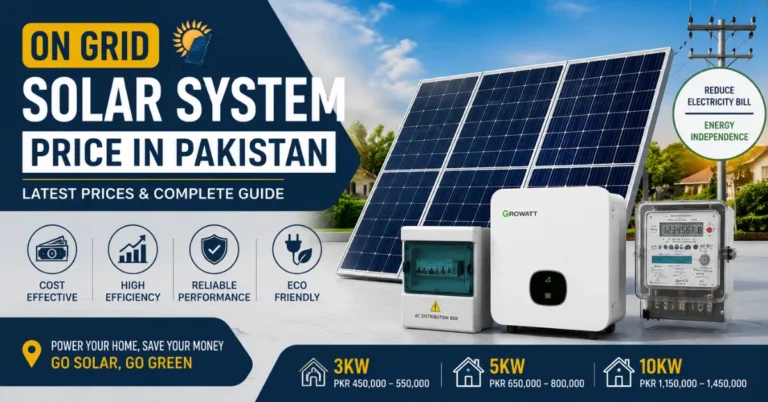
| 3kW On-Grid Solar System | Rs. 340,000 – 420,000 |
| 3kW Hybrid Solar System | Rs. 430,000 – 580,000 |
| 3kW Hybrid with 5kWh Lithium Battery | Rs. 620,000 – 780,000 |
| 3kW Off-Grid Solar System | Rs. 500,000 – 700,000 |
Note: Prices may vary depending on your city, selected brands, roof type, and installation requirements. Recent market surveys place complete 3kW systems roughly within these ranges.
What Is Included in a 3kW Solar System?
A complete installation usually includes:
| Component | Quantity |
|---|---|
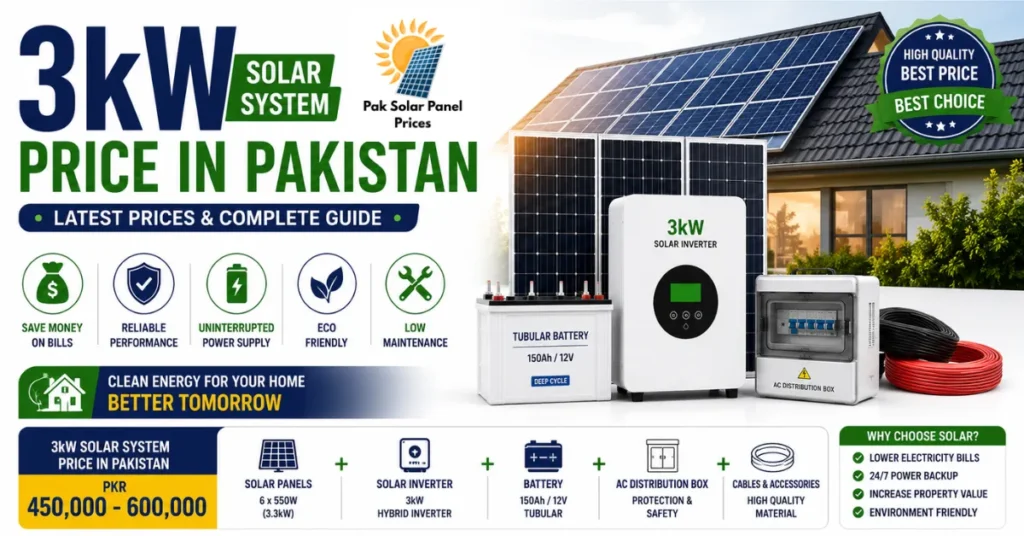
| 590W–600W Solar Panels | 5–6 Panels |
| 3kW Hybrid or On-Grid Inverter | 1 Unit |
| Mounting Structure | Complete Set |
| DC & AC Protection | Included |
| Solar Cables & Connectors | Included |
| Earthing System | Included |
| Installation & Testing | Included |
Hybrid systems also include battery compatibility, while battery-based packages include lithium or tubular batteries.
How Much Electricity Can a 3kW Solar System Generate?
Electricity production depends on sunlight hours, weather conditions, roof direction, and panel efficiency.
| Time Period | Estimated Generation |
|---|---|
| Daily | 12–16 Units |
| Monthly | 360–480 Units |
| Yearly | 4,300–5,700 Units |
Homes in Punjab, Sindh, and southern regions often achieve higher production because of stronger sunlight.
Is a 3kW System Enough for Your Home?
A 3kW system is generally suitable for families with moderate electricity consumption.
It can comfortably support:
- 6–8 LED lights
- 4–6 ceiling fans
- One inverter refrigerator
- LED television
- Wi-Fi router
- Laptop and mobile charging
- Washing machine (limited daytime use)
- Small water pump
If you frequently use air conditioners or heavy appliances, you may need a larger solar system.
Estimated Monthly Savings
Depending on your electricity usage and tariff slab, a 3kW system can reduce electricity expenses substantially.
| Electricity Consumption | Estimated Monthly Savings |
|---|---|
| 300–400 Units | Rs. 10,000 – 15,000 |
| 400–500 Units | Rs. 15,000 – 20,000 |
| 500+ Units | Even higher savings if most usage is during daylight |
Actual savings depend on self-consumption, export units, and local electricity tariffs.
Read More: 20kW Solar System Price in Pakistan 2026 – Latest Price Guide
Which Type of 3kW System Should You Choose?
On-Grid
Best for homes with stable electricity supply and net metering.
Hybrid
Ideal for users who need backup during load shedding and want battery support.
Off-Grid
Suitable for remote areas where grid electricity is unavailable.
Factors That Affect Installation Cost
Several factors influence the final project cost:
- Solar panel brand
- Inverter quality
- Battery type
- Roof design
- Mounting structure
- Wiring distance
- Installation company
- Net metering requirements
Choosing premium components may increase the initial investment but often improves long-term reliability and energy production.
Common Mistakes to Avoid
Many homeowners make avoidable errors before installing solar.
Avoid these mistakes:
- Selecting the cheapest installer instead of the most experienced.
- Ignoring inverter warranty.
- Using low-quality cables and protection equipment.
- Installing without calculating actual electricity usage.
- Purchasing non-documented or B-grade solar panels.
Read More: 50kW Solar System Price in Pakistan 2026 – Latest Commercial Price List
Latest Post
- itel Lithium Battery 24V Price in Pakistan 2026 – Latest Price, Specifications & Buying Guide
- Install Solar Panels Cost in Pakistan 2026 – Complete Guide
- Solar Geyser Price in Pakistan
- Millat Battery Price in Pakistan 2026
- Solar Geyser Price in Pakistan 2026 – Latest Rates, Types & Buying Guide
Conclusion
Pakistan’s 3kW Solar System Price is quite favorable for individuals who want to cut down on their power costs without having to install a huge solar system. No matter whether you decide to go for an on-grid, hybrid, or off-grid system, the right equipment and installer will guarantee you trouble-free service for a long time to come.



 Join Channel