

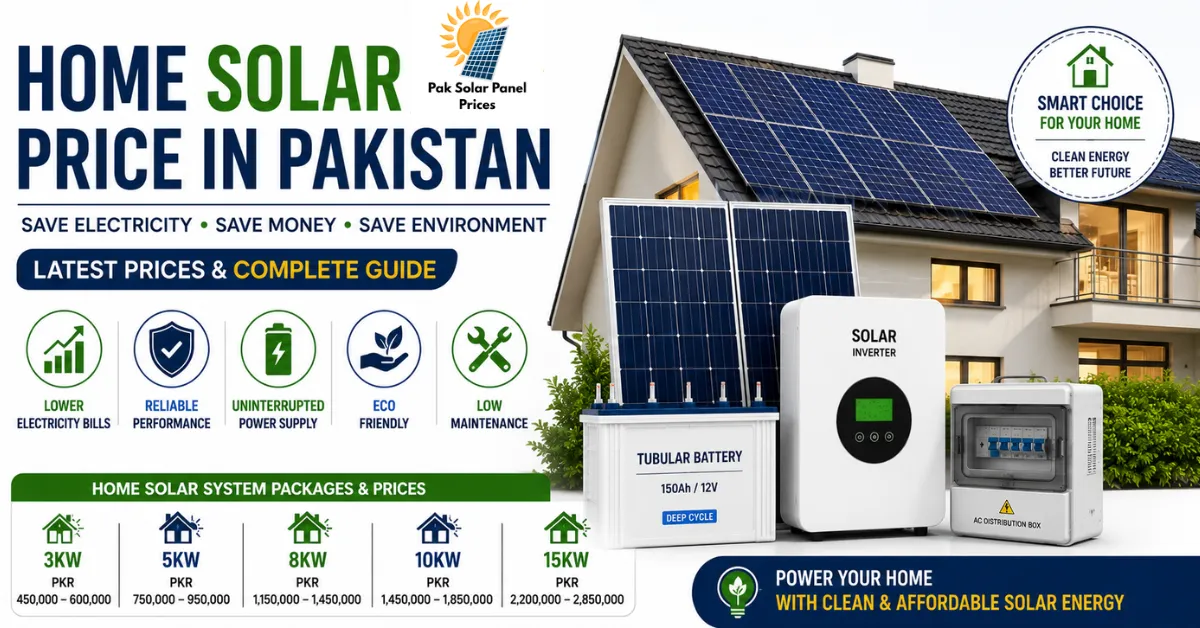
Home Solar System Price in Pakistan 2026 – Complete Cost Guide
Electricity bills in Pakistan keep climbing, and load shedding is still a daily headache in many cities. That’s why thousands of homeowners are switching to solar every month. But the first question everyone asks is simple: “How much does a home solar system actually cost in Pakistan?”
Home Solar System breaks down real 2026 market prices system-wise, component-wise, and city-wise so you know exactly what to expect before you get a quote.
Home Solar System Price in Pakistan 2026
| System Size | System Type | Estimated Price (PKR) | Suitable For |
|---|---|---|---|
| 3 kW | On-Grid | 350,000 – 450,000 | Small home (5–6 marla), 2–3 fans, lights, 1 AC |
| 3 kW | Hybrid (no battery) | 420,000 – 480,000 | Small home wanting backup-ready inverter |
| 5 kW | On-Grid | 550,000 – 700,000 | Medium home (7–10 marla), 2 ACs, fridge |
| 5 kW | Hybrid (with battery) | 750,000 – 950,000 | Medium home needing backup during load shedding |
| 6 kW | Hybrid | 850,000 – 1,100,000 | 10 marla home with 2–3 ACs |
| 8 kW | Hybrid | 1,050,000 – 1,350,000 | Large home (1 kanal), 3–4 ACs |
| 10 kW | Hybrid | 1,200,000 – 1,600,000 | Large home / small commercial use |
| 12 kW | Hybrid | 1,337,000 – 1,800,000 | Very large home, multiple ACs, geysers |
Prices vary by panel brand, inverter brand, battery type, and installation complexity. These are indicative installed prices, not panel-only prices.
Read More: Solar System on Installments in Pakistan 2026 – Easy Monthly Installment Plans
What Affects Solar System Price in Pakistan?
Solar pricing in Pakistan isn’t fixed it depends on several moving parts:
Solar Panel Price in Pakistan (Per Watt – 2026)
| Panel Type | Price Range (PKR/watt) |
|---|---|
| Standard A-grade (P-type) | 27 – 35 |
| N-type TOPCon (Tier-1) | 42 – 48 |
| N-type Bifacial (700W+) | 44 – 48 |
| B-grade panels | Lower, but not recommended for home rooftop use |
Popular Tier-1 brands available in Pakistan include Jinko Solar, LONGi, Canadian Solar, JA Solar, Trina Solar, and Astro Energy. Jinko is generally the more budget-friendly option, while LONGi is known for slightly higher efficiency.
Read More: Sungrow Hybrid Inverter Price in Pakistan 2026 – Latest Models & Today Rates
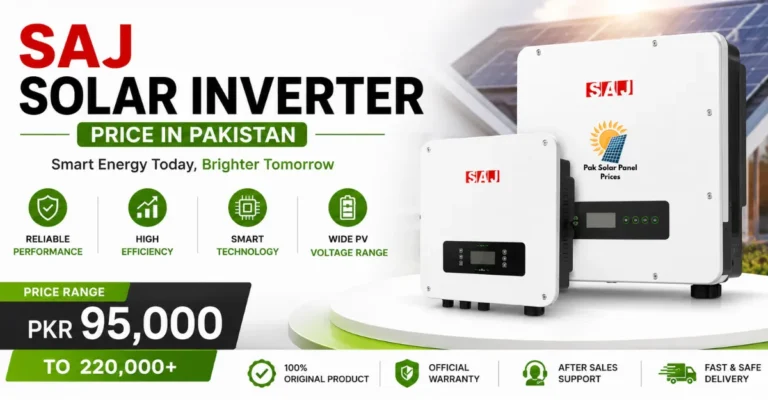
Solar Inverter Price in Pakistan
| Inverter Type | Capacity | Price Range (PKR) |
|---|---|---|
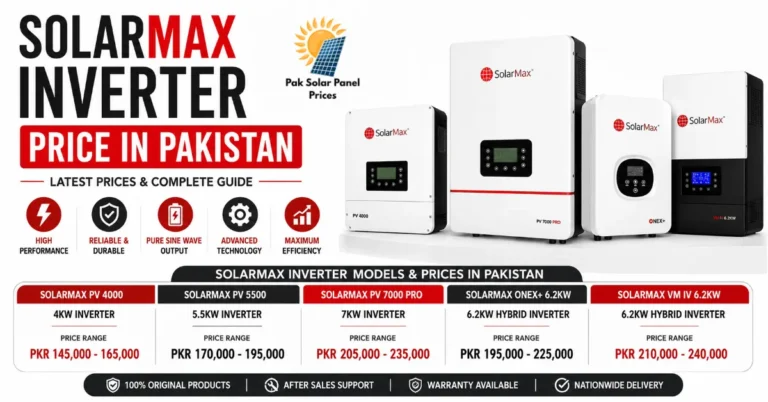
| On-grid (Solis, budget) | 5 kW | 120,000 – 160,000 |
| Hybrid (Growatt/Sofar) | 5–6 kW | 180,000 – 260,000 |
| Hybrid (Huawei premium) | 10 kW | 280,000 – 350,000+ |
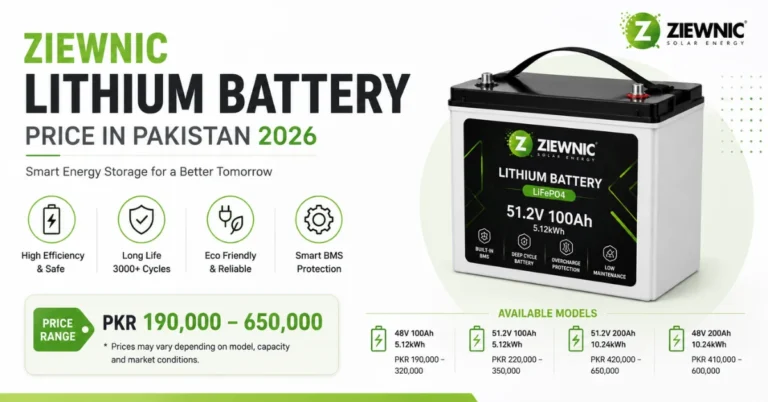
Lithium Battery Price in Pakistan
| Battery Capacity | Price Range (PKR) |
|---|---|
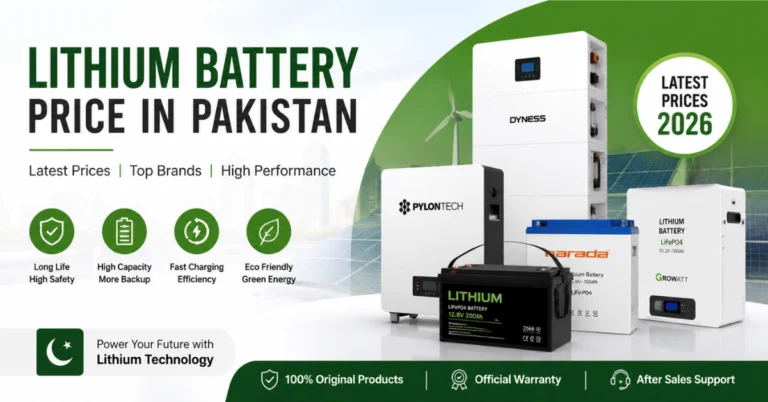
| 2.5 kWh | 120,000 – 135,000 |
| 5 kWh | 250,000 – 320,000 |
| 10 kWh | 480,000 – 600,000 |
Popular battery brands: Pylontech, Dyness, Sofar, Pytes, BYD, and Knox Powerwall.
Read More: Best RV Solar Panel Kit with Battery and Inverter for Off-Grid Camping
Component-Wise Breakdown of a Typical Home Solar System
A complete solar system isn’t just panels. Here’s what your quote should always include:
Buyer’s tip: Many companies advertise a low “system price” that only covers panels, then add installation, wiring, and net metering as hidden extras inflating your final bill by 20–40%. Always ask for an all-inclusive, per-watt price and compare that number across vendors, not just the total.
On-Grid vs Hybrid vs Off-Grid – Which One Should You Choose?
For most homeowners dealing with both high bills and frequent load shedding, a hybrid solar system offers the best balance of cost and reliability.
Read More: 350 Watt Solar Panel Price in Pakistan 2026 | Latest Today Price List
How Many Solar Panels Does Your Home Need?
A rough guide based on home size and average electricity consumption:
A 1 kW solar system generally produces about 4–5 units of electricity per day in Pakistan’s climate, depending on sunlight hours and panel orientation.
Net Metering in Pakistan – What You Need to Know
Net metering lets you sell surplus solar electricity back to the grid, reducing your monthly bill further. Processing times and costs vary by DISCO:
- LESCO (Lahore) / IESCO (Islamabad): Faster approvals, generally within 2 weeks, minimal extra fees.
- K-Electric (Karachi): Requires mandatory smart meter upgrade and third-party inspection, adding roughly PKR 25,000–40,000 to your total cost.
Is Solar Worth It in Pakistan? (ROI & Payback)
Grid electricity in Pakistan currently costs roughly PKR 28–45 per unit and keeps rising every year. A home solar system, by comparison, works out to roughly PKR 8–12 per unit over its lifetime once installation and maintenance are factored in. For most residential households, a hybrid system typically pays for itself within 3 to 5 years, after which the electricity it generates is essentially free for the remaining 20+ years of the panels’ lifespan.
Checklist Before You Buy a Solar System
- Get quotes from at least 3 different installers.
- Compare per-watt price, not just the total quoted figure.
- Confirm whether the quote includes installation, wiring, earthing, and net metering not just panels.
- Ask for the exact panel and inverter model/datasheet don’t accept vague terms like “580W panel” without a brand.
- Check warranty terms: panels usually carry 25-year performance warranties, inverters 3–10 years, and installers typically offer 1–2 years workmanship warranty.
- Choose a NEPRA-licensed installer field data shows properly certified installation significantly reduces long-term failure rates.
- For hybrid systems, confirm battery type (LiFePO₄/lithium is recommended over lead-acid) and its depth-of-discharge rating.
 Join Channel