

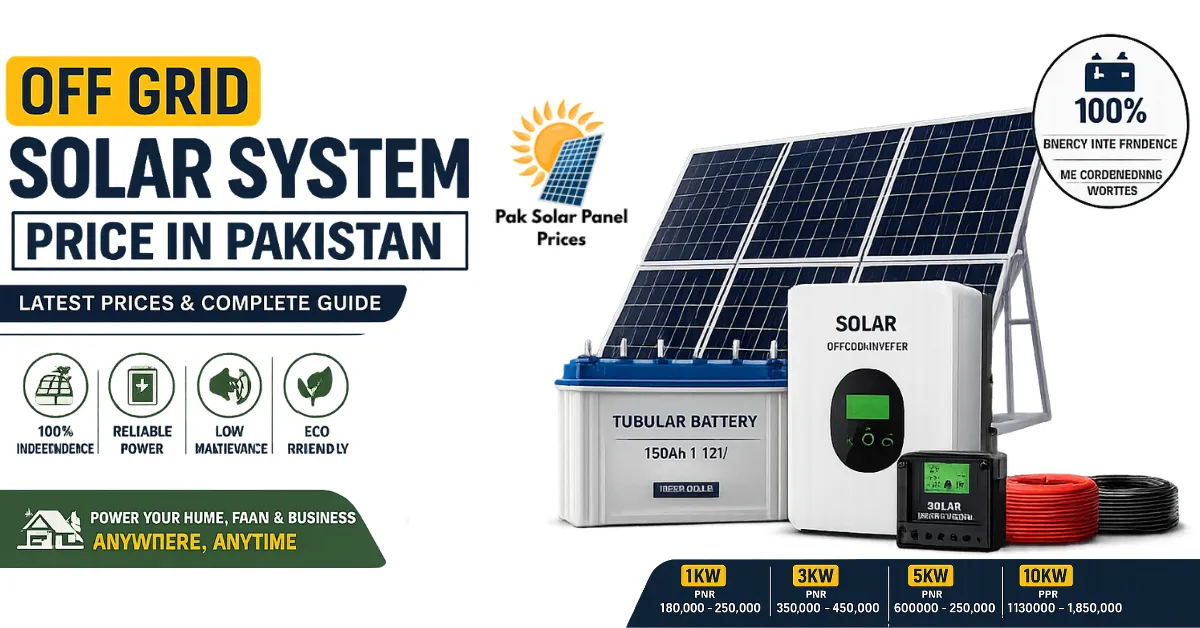
Off-Grid Solar System Price in Pakistan – Packages & Installation Cost 2026
For homes and businesses in areas with unreliable or no grid connection at all, an off-grid solar system is the ultimate solution for energy independence. Unlike on-grid systems, off-grid setups work completely on their own no WAPDA connection, no net metering, no monthly bill. This guide covers the off-grid solar system price in Pakistan, what drives the cost, and how to choose the right size for your needs.
What Is an Off-Grid Solar System?
An off-grid solar system operates entirely independent of the national power grid. Solar panels charge a battery bank during the day, and the stored energy powers your home or business around the clock day, night, and through load shedding. Because it relies solely on batteries for storage, an off-grid system requires more components than an on-grid setup: a larger battery bank, a heavier-duty inverter/charge controller, and usually a bigger panel array to keep batteries topped up even on cloudy days.
Read More: Solar System on Installments in Pakistan 2026 – Easy Monthly Installment Plans
Key advantages:
Trade-offs: Higher upfront cost due to the battery bank, and the system must be carefully sized to your actual daily consumption since there’s no grid to fall back on if you run short.
Off-Grid Solar System Price in Pakistan by System Size 2026
| System Size | Estimated Price Range (PKR) | Suitable For |
|---|---|---|
| 2 kW | 300,000 – 360,000 | Very small homes, basic loads (fans, lights, TV) |
| 3 kW | 420,000 – 550,000 | Small homes, essential appliances |
| 3.5 kVA | 500,000 – 600,000 | Small homes with fridge + fans + lights |
| 5 kW | 750,000 – 900,000 | Average household, moderate daily usage |
| 6 kW | 700,000 – 950,000 | Medium homes with AC support during the day |
| 10 kW | 1,500,000 – 1,800,000 | Large homes, farmhouses, small commercial setups |
Note: These are approximate turnkey prices including panels, off-grid/hybrid inverter, battery bank, mounting structure, wiring, and protection accessories. Actual cost depends heavily on battery type and capacit always get an itemized quote before buying.
Read More: Solar Power Inverter for Home in Pakistan 2026 | Best Prices & Buying Guide
What Affects Off-Grid Solar System Price the Most?
1. Battery Type and Capacity The Biggest Cost Driver
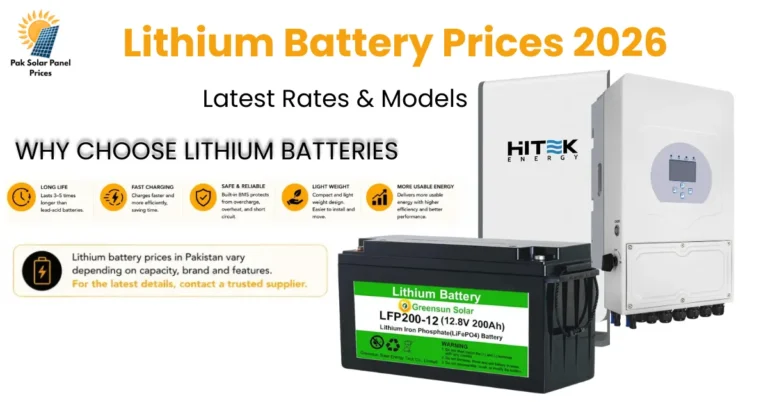
The battery bank is what separates off-grid pricing from on-grid, and it typically accounts for 35% or more of total system cost. Your two main options:
- Lithium (LiFePO4) batteries: Higher upfront cost but longer lifespan (often 6,000+ charge cycles), deeper safe discharge, faster charging, and less maintenance. A single 5kWh–5.12kWh lithium battery module currently costs roughly PKR 120,000–275,000 depending on brand and capacity.
- Lead-acid / AGM / Gel batteries: Cheaper initially but need more frequent replacement (typically every 3–5 years) and more maintenance, making them costlier over the system’s lifetime.
A 5kW off-grid system typically needs 4–8 batteries (150–200 Ah each) for a full day-night cycle, depending on battery chemistry and desired backup hours.
2. Inverter/Charge Controller Capacity
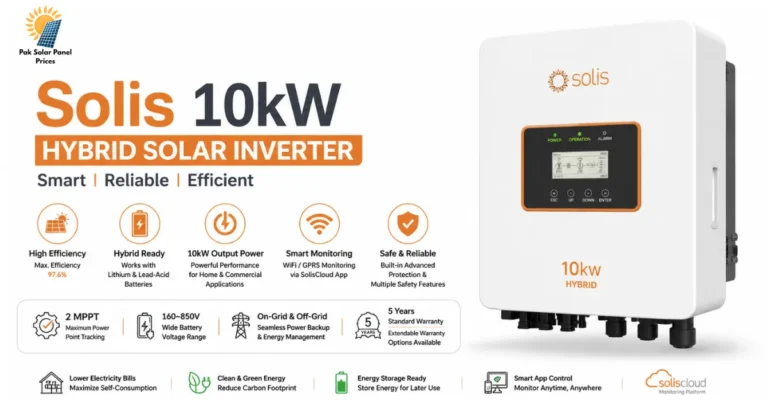
Off-grid inverters manage both battery charging and AC power output, so they’re built heavier-duty than standard on-grid inverters. Prices generally run:
- 5kW–6.2kW off-grid inverters: PKR 100,000 – 250,000
- 10kW+ off-grid inverters: PKR 180,000 – 300,000+
3. Solar Panel Array Size
Off-grid systems are usually oversized relative to on-grid systems of the same “rated” capacity, since the panels must charge the battery bank fully even on shorter or cloudier days this pushes total panel cost higher per kW compared to a grid-tied system.
4. Site Location and Installation Complexity
Off-grid systems are common in remote or rural areas, where delivery, transport, and installation logistics can add 7–11% to the total cost compared to urban installations.
Read More: Inverex Solar Panel Price in Pakistan 2026
Off-Grid vs. On-Grid vs. Hybrid: Quick Comparison
| Feature | Off-Grid | On-Grid | Hybrid |
|---|---|---|---|
| Grid Connection | None | Required | Required |
| Battery Backup | Yes (full) | No | Yes (partial/full) |
| Works During Load Shedding | Yes | No | Yes |
| Upfront Cost | Highest | Lowest | Medium |
| Net Metering/Billing Eligible | No | Yes | Yes |
| Best For | Remote areas, no grid access | Areas with stable grid supply | Areas with frequent outages |
If your property has no WAPDA connection at all common in remote villages, farmhouses, and some semi-rural areas off-grid is your only real option. If you do have grid access but want backup during outages, a hybrid system is usually more cost-effective than going fully off-grid, since it needs a smaller battery bank sized only for backup hours rather than full independence.
How Many Batteries Do You Need?
Battery sizing depends on your daily energy consumption (in kWh) and how many “autonomy days” (days without sun) you want covered. As a rough guide:
Always have your installer calculate your daily kWh consumption before finalizing battery bank size undersizing leads to power shortages, while oversizing wastes money.
Read More: 350 Watt Solar Panel Price in Pakistan 2026 | Latest Today Price List
Tips Before You Buy an Off-Grid System
- Prioritize lithium batteries if budget allows the higher upfront cost is usually offset by a much longer lifespan and lower long-term maintenance.
- Size the panel array generously off-grid systems have no grid to fall back on, so under-sizing the solar array is a common and costly mistake.
- Ask about expandability many modern battery/inverter systems let you add panels or batteries later as your needs grow.
- Check inverter surge capacity make sure it can handle the startup load of appliances like AC compressors and water pumps.
- Confirm warranty terms look for at least 10-year warranties on lithium batteries and 25-year performance warranties on panels.
- Get a proper site survey remote or shaded locations affect panel placement and total system sizing.
 Join Channel