

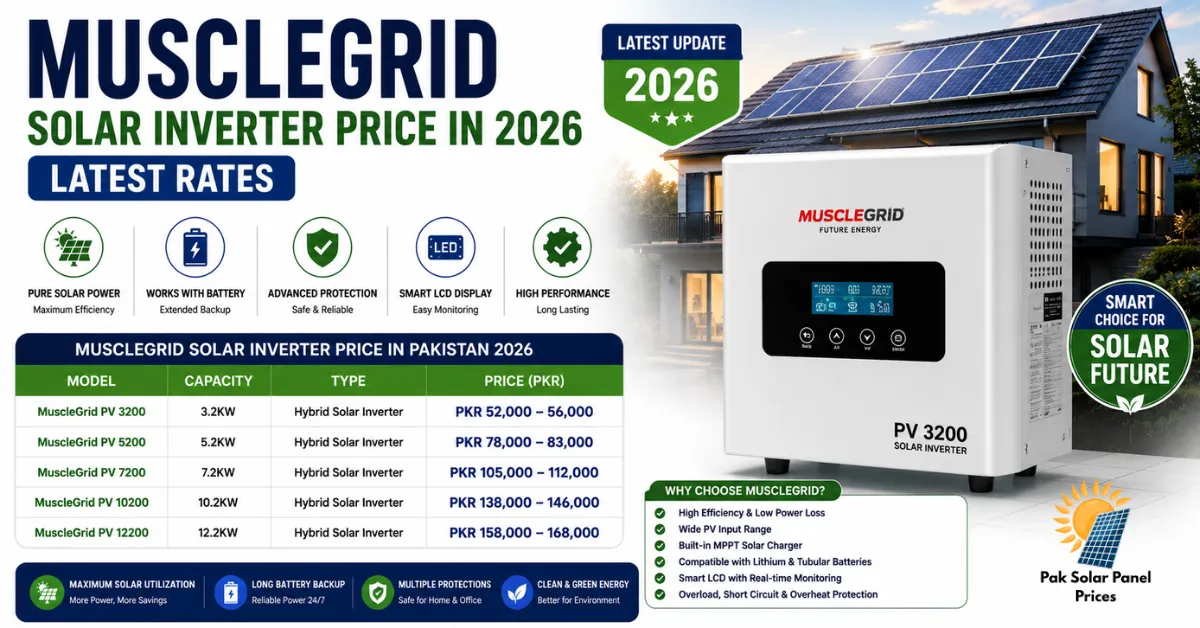
Best MuscleGrid Solar Inverter 2026 – Prices, Features & Buying Guide
MuscleGrid has grown from a voltage-stabilizer manufacturer into one of the more visible Indian brands in the hybrid solar inverter space, competing on the same shelves as Luminous, Livguard, and Loom Solar. The pitch is aggressive: triple MPPT charge controllers, batteryless operation, WiFi monitoring, and prices that consistently undercut the bigger names by 10–30%. But aggressive pricing and genuine long-term reliability aren’t always the same thing so this review digs into what MuscleGrid actually delivers, based on their published specs, real buyer feedback across Amazon, Flipkart, and Moglix, and how the lineup stacks up against the competition.
Company Snapshot
MuscleGrid is an India-based manufacturer of solar inverters, LiFePO4 lithium batteries, and voltage stabilizers, positioning itself as a fully “Indian Made” brand built for local grid conditions frequent voltage fluctuations, long power cuts, and the punishing heat that shortens the life of cheaper electronics. Their products carry BIS certification under IS 16242 for inverter safety, which is the baseline compliance standard to look for in this category. The company backs lithium batteries with a 5-year warranty and offers 24×7 phone/WhatsApp support, positioning itself as a premium-but-affordable option in a crowded market.
Read More: Solis Inverter Price in Pakistan 2026 – Latest Models, Features & Complete Buying Guide
The Product Lineup
MuscleGrid’s range spans four broad categories:
Key Features Worth Knowing
Read More: Maryam Nawaz Solar Panel Scheme 2026 Registration & Latest Updates
What Actual Buyers Are Saying
Reviews across Amazon and Flipkart paint a genuinely mixed picture, which is worth taking seriously rather than smoothing over:
On the positive side, a recurring theme is that the inverters perform reliably in batteryless mode, integrate cleanly with existing solar arrays, and that the monitoring app is functional and easy to use day-to-day. Several buyers specifically praised the build quality and said the unit handled full household load including air conditioners and submersible pumps without issue.
On the negative side, a meaningful minority of reviewers flagged build-quality inconsistency between units, and a smaller but vocal group reported frustrating experiences with after-sales support and replacement turnaround, including one reviewer who called the service “very very bad” despite being satisfied with the hardware itself. Cable and accessory availability was also flagged as inconsistent in at least one case. This split is common in the budget-to-mid-range Indian inverter segment generally, but it means MuscleGrid’s quality control appears to vary more than it does with more established, higher-priced brands.
Pricing: Where MuscleGrid Actually Wins
This is the brand’s clearest strength. A 4.2kW True Hybrid inverter runs around ₹39,000, and complete combo packages inverter, lithium battery, and even bundled solar panels are frequently bundled at prices 40–65% below the manufacturer’s listed MRP through direct and marketplace sales. For comparison, a similarly specced hybrid inverter from an established brand like Luminous or Microtek can run 20–40% higher for equivalent kW ratings, though those brands generally carry longer service track records and denser authorized-service networks.
| Model | Capacity | Approx. Price | Best For |
|---|---|---|---|
| Solar Sensation 1.2KVA | 1.2kW | ₹18,000–20,000 | Small homes, lights & fans only |
| Solar Sensation 3.5KVA | 3.5kW | ₹28,000–32,000 | Small home with basic appliances |
| 4.2kW True Hybrid (2026 model) | 4.2kW | ₹39,000–45,000 | Mid-size home, moderate backup needs |
| 6.2kW True Hybrid Triple MPPT | 6.2kW | ₹65,000–80,000 | Full home with AC, pump support |
| 10.2kW True Hybrid Dual MPPT | 10.2kW | ₹1,20,000–1,50,000 | Large homes, heavy load, near-full independence |
(Prices vary by retailer, ongoing promotions, and whether batteries/panels are bundled always confirm current pricing directly before purchasing.)
Warranty and After-Sales Support
MuscleGrid offers a 5-year warranty on lithium batteries and typically 1–3 years on inverter units depending on the model, which is roughly in line with the segment. Their stated replacement process a technician visit and on-the-spot swap for manufacturing defects sounds convenient on paper, but based on buyer feedback, execution seems to vary by region and demand load on their support team. If after-sales reliability is a top priority for you (particularly relevant given India’s varying service infrastructure across tier-2/tier-3 cities), it’s worth checking recent reviews specific to your city before committing to a higher-capacity, higher-cost unit.
Read More: Jinko Tiger Neo 585W Solar Panel Price in Pakistan 2026 | Latest Market Rates
How MuscleGrid Compares to the Established Names
Who Should — and Shouldn’t — Buy MuscleGrid
A good fit if: you want a hybrid inverter with strong on-paper specs at a genuinely lower price than the big established brands, you’re comfortable doing some of your own research/comparison rather than leaning entirely on a dealer’s advice, and you’re specifically interested in a batteryless or lithium-battery setup rather than a traditional lead-acid system.
Think twice if: after-sales service reliability is your top priority over price, you live somewhere with limited access to technicians for either brand, or you’re installing a large system where the cost difference between MuscleGrid and an established brand is small relative to your total project cost in that case, the brand with the denser service network may be worth the premium.
Conclusion
MuscleGrid has built a genuinely competitive product on paper triple MPPT, batteryless hybrid flexibility, app monitoring, and BIS certification at a price point that undercuts the market leaders. The hardware, when it works as intended, earns real praise from buyers. The gap between MuscleGrid and the established Indian inverter brands isn’t in the spec sheet; it’s in the consistency of build quality and after-sales support, where feedback is more mixed. If you’re budget-conscious and willing to do a bit of due diligence on your specific model and city’s service availability before buying, MuscleGrid is a reasonable pick. If your priority is a fully hands-off, “buy it once and never think about it again” experience, the safety margin still leans toward the more established brands even at a higher price.





 Join Channel