

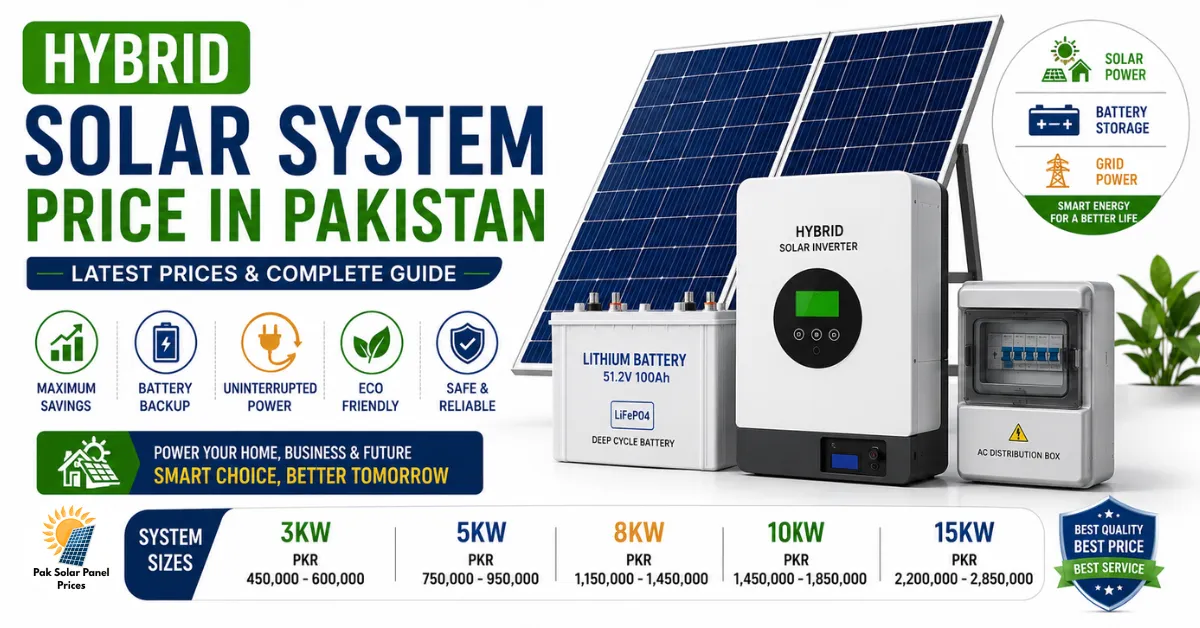
Hybrid Solar System Price Today – Packages, Installation & Cost 2026
If you want the savings of solar with the security of battery backup during load shedding, a hybrid solar system is the most popular choice in Pakistan today. It combines the best of both worlds grid connection for net metering/net billing, plus a battery bank for uninterrupted power when WAPDA goes down. This guide breaks down the hybrid solar system price in Pakistan, what drives the cost, and how to pick the right size and battery setup for your home or business.
What Is a Hybrid Solar System?
A hybrid solar system is connected to both the national grid and a battery bank at the same time. A smart hybrid inverter automatically manages three power sources solar panels, batteries, and the grid switching between them seamlessly based on availability and demand.
Read More: Solar System on Installments in Pakistan 2026 – Easy Monthly Installment Plans
How it works in practice:
Key advantages:
This flexibility is exactly why hybrid has become the single most-installed solar configuration for urban Pakistani households in 2026 — it’s the practical middle ground between the cheaper on-grid system and the fully independent (but expensive) off-grid system.
Hybrid Solar System Price in Pakistan by System Size 2026
| System Size | Estimated Price Range (PKR) | Suitable For |
|---|---|---|
| 3 kW | 550,000 – 750,000 | Small homes, essential backup (fans, lights, fridge, router) |
| 5 kW | 950,000 – 1,250,000 | Average household with 1–2 ACs, fridge, washing machine |
| 6 kW | 850,000 – 1,000,000 | Medium homes, 2–3 inverter ACs during the day + backup |
| 8 kW | 1,150,000 – 1,450,000 | Larger homes, higher daytime + nighttime load |
| 10 kW | 1,600,000 – 2,100,000 | Big houses or small commercial spaces with strong backup needs |
| 15 kW+ | From 2,700,000 | Commercial and high-consumption setups |
Note: These are approximate turnkey prices including Tier-1 panels, hybrid inverter, a starter lithium battery bank, mounting structure, wiring, protection devices, and net metering paperwork. Battery capacity is the biggest swing factor adding more backup hours or upgrading to a larger battery bank can shift these numbers significantly. Always request an itemized, component-by-component quote.
Read More: Canadian Solar Introduces New TOPCon Gen3 Solar Panel with 24.8% Efficiency
What Affects Hybrid Solar System Price the Most?
1. Hybrid Inverter Brand and Capacity
The hybrid inverter is the “brain” of the system, managing solar, battery, and grid power together so it costs more than a basic on-grid inverter. As of 2026, hybrid inverter prices range roughly from:
- 3kW–5kW models: PKR 75,000 – 150,000
- 6kW–8kW single-phase models: PKR 150,000 – 400,000
- 10kW+ and three-phase commercial models: PKR 300,000 – 1,200,000+
Popular brands in Pakistan include Inverex, Growatt, Solis, GoodWe, Huawei, Knox, and MaxPower. Price differences within the same “kW rating” often come down to real specification differences IP protection rating, number of MPPT trackers, transfer time during outages, and battery chemistry compatibility. A cheaper unit and an expensive one at the same stated capacity are rarely the same product.
2. Battery Type and Capacity
This is the single biggest cost variable in a hybrid system:
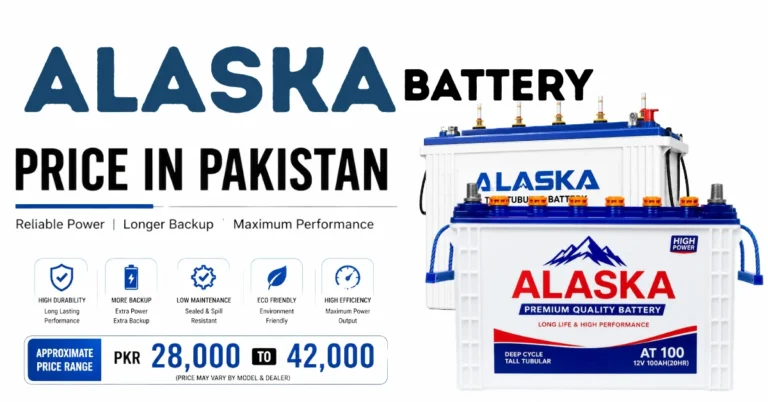
- Lithium (LiFePO4) batteries: Higher upfront cost, but 6,000+ charge cycles, faster charging, deeper safe discharge, and roughly a 10-year lifespan. A single 5kWh module typically costs PKR 120,000–275,000 depending on brand and capacity.
- Tubular/lead-acid batteries: Cheaper initially but need more maintenance and replacement every 3–5 years, often making them costlier over the system’s lifetime.
Unlike off-grid systems, hybrid setups don’t need batteries sized for full independence just enough to cover your typical load-shedding hours, which keeps upfront cost more manageable.
3. Solar Panel Brand and Wattage
Tier-1 N-type panels from Jinko, LONGi, Canadian Solar, JA Solar, and Trina currently run roughly PKR 24–35 per watt at retail, with better bulk rates through installers. Panel cost typically makes up 30–40% of total system price.
4. Backup Hours Required
The more hours of full-home backup you want during an outage, the bigger your battery bank needs to be and the higher your total cost. Most homeowners size batteries for essential loads (fans, lights, fridge, router, and maybe one AC) rather than the entire house, which keeps costs reasonable.
5. Mounting Structure and Installation Complexity
Standard ground/flush-mount structures cost less than elevated structures needed for shaded roofs or space optimization. Roof height, wiring distance, and site accessibility also affect labor costs.
Read More: 350 Watt Solar Panel Price in Pakistan 2026 | Latest Today Price List
Net Metering/Net Billing Still Applies to Hybrid Systems
Since hybrid systems remain connected to the grid, the same NEPRA Prosumer Regulations 2026 rules that apply to on-grid systems apply here too. In 2026, NEPRA shifted new solar applicants from the old 1:1 net metering model to a net billing system, where surplus exported electricity is bought at a much lower rate (roughly PKR 10–11 per unit for new connections, down from around PKR 25–26 per unit previously) while imported grid electricity is billed at full retail rates.
What this means for hybrid buyers:
The financial case for hybrid has actually strengthened relative to on-grid under the new rules, because a hybrid system lets you store and self-consume your solar power at night instead of exporting it at the new, much lower buyback rate. Every unit you use from your own battery saves you the full retail rate; every unit you export earns far less than before. This is why installers increasingly recommend hybrid over pure on-grid for anyone installing solar in 2026.
Hybrid vs. On-Grid vs. Off-Grid: Which One Should You Choose?
| Feature | On-Grid | Hybrid | Off-Grid |
|---|---|---|---|
| Grid Connection | Required | Required | None |
| Battery Backup | No | Yes (sized to need) | Yes (full independence) |
| Works During Load Shedding | No | Yes | Yes |
| Upfront Cost | Lowest | Medium | Highest |
| Net Metering/Billing Eligible | Yes | Yes | No |
| Best For | Stable grid areas, tightest budget | Areas with occasional/frequent load shedding | No grid access at all |
Quick decision guide:
Read More: Solar Power Inverter for Home in Pakistan 2026 | Best Prices & Buying Guide
Tips Before You Buy a Hybrid System
- Match battery size to your actual backup needs, not your whole house oversizing the battery bank is the most common way buyers overspend.
- Compare inverters on specification, not just kW rating check IP rating, number of MPPT inputs, transfer time, and battery/BMS compatibility.
- Confirm net billing details with your installer before signing ask what buyback rate applies to your specific application date.
- Ask about dual AC output a good hybrid inverter separates “heavy” loads (like ACs) from “essential” loads (lights, fans, router) so your battery lasts longer during an outage.
- Check warranty depth look for at least 25-year panel performance warranties, 5–10 years on the inverter, and 10-year options on lithium batteries.
- Get at least 3 itemized quotes so you can compare panel brand, inverter model, and battery specs side by side, not just a bottom-line number.



 Join Channel