

How Solar Panels Work in Pakistan – Complete Guide to Solar Energy
In Pakistan, Solar Panels Work in Pakistan have now become a usual sight on rooftops, commercial buildings, agricultural lands, and even houses. With escalating cost of electricity, load shedding and the emerging trend of renewable energy, people are getting inclined towards the use of solar power as an alternate source of electricity.
Then comes the question, “How does a solar panel generate electricity from sunlight?” Do they require direct sunlight for functioning? What happens during the nights? How do solar panels provide electricity to household appliances in Pakistan?
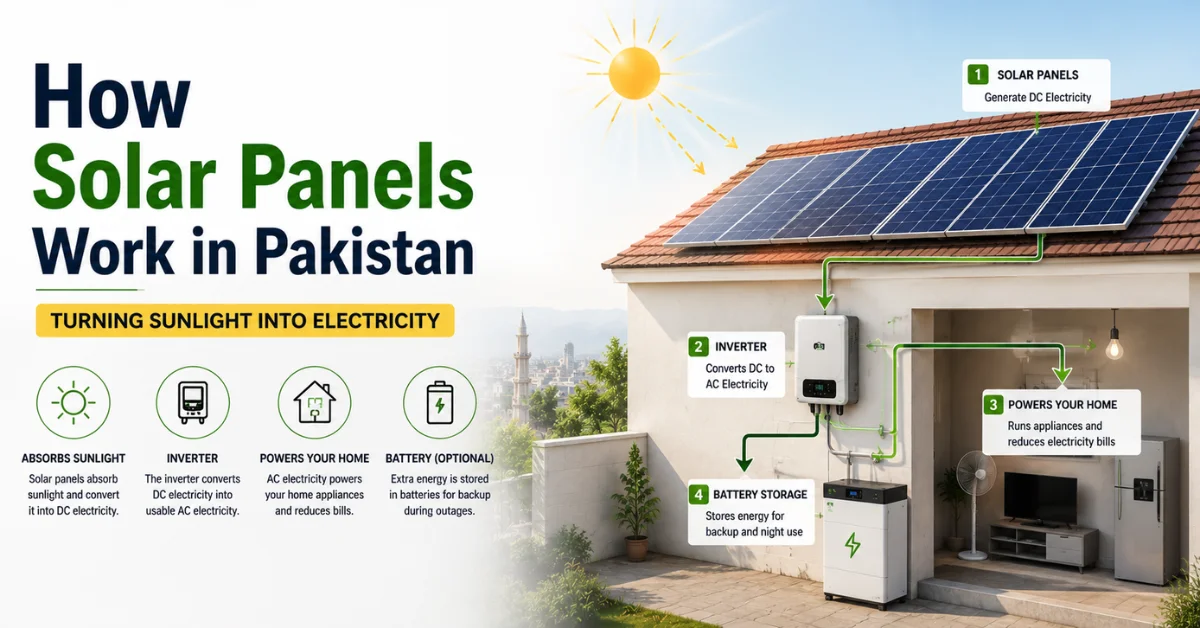
This can be answered through a technology known as photovoltaics (PV). In these systems, the solar cells capture the sunlight and generate electricity from it. Electricity generated through these panels is generally direct current (DC). This DC electricity is then changed into AC electricity by the inverter.
How Do Solar Panels Work?
Photovoltaic cells in solar panels turn sunlight into electricity of direct current (DC). The movement of electrons results in the creation of an electric current when sunlight hits the cells. Then, the created electricity is transported from the solar panel to a solar inverter. The inverter changes the DC electricity into alternating current (AC) electricity that can be used for home appliances.
The basic process is:
- Sunlight → Solar Panels → DC Electricity → Inverter → AC Electricity → Appliances
Read More: Alaska Battery Price in Pakistan 2026 – Latest Models, Prices and Complete Guide
What Is the Photovoltaic Effect?
The photovoltaic effect is the fundamental phenomenon that enables the creation of electricity using sunlight. Solar panels are made from semiconductor elements, most commonly silicon. Sunlight hits the cell and its energy makes electrons flow in the form of an electric current. Many cells can make up one solar module, whereas many modules can be joined together to form a solar array.
What Happens After Solar Panels Generate Electricity?
The electricity produced by the solar panels first goes into the inverter. The next step is for the system to determine the way in which the electricity that has been generated should be utilized. In daylight, the energy generated can be used to operate household appliances. In case the generation is more than utilization, the energy may be stored or sold. This implies that the inverter plays a vital role in a fully-fledged solar system.
Role of a Solar Inverter
The solar inverter is used to convert the DC electricity generated through solar panels into AC electricity that can be used at home. Some modern inverters are capable of controlling solar power generation, monitoring batteries and electricity flow from solar panel system, home and grid. The main inverter types used in solar installations include:
| Inverter Type | Main Function |
|---|---|
| On-Grid Inverter | Works with the electricity grid |
| Hybrid Inverter | Works with solar, batteries and grid |
| Off-Grid Inverter | Designed for independent solar systems |
Read More: 16kW Lithium Battery Price in Pakistan 2026 – Latest Cost, Brands & Backup Guide
How Solar Panels Work With a Battery
Battery helps in storing the energy produced through the solar panel in order to use it in the future. The excess electricity generated during the daytime can be stored in a battery since at that time electricity production will be more than electricity consumption. This stored electricity can be utilized during the night or power outages to power chosen loads.
This is one of the reasons why hybrid solar systems have become very common among houses where people need both savings on bills and backup energy.
How Solar Panels Work During Load Shedding
One such wrong belief about the solar system is that all solar systems offer electricity during load shedding. It is not true. A regular grid connected system usually stops producing electricity when there is no grid.
In that case, hybrid inverter with appropriate battery can produce backup electricity during power outages.
How Solar Panels Work at Night
Solar panels cannot generate electricity at night because they require sunlight. A home can still receive electricity after sunset through:
- Battery storage
- Grid electricity
- A combination of both
What Happens to Excess Solar Electricity?
In cases where solar panels produce excess electricity, which cannot be consumed within the house, what happens to the excess electricity? In a battery-based system, excess electricity can be used to recharge the battery. In an approved grid-connected system, excess electricity can be fed into the grid. Pakistan operates on bidirectional metering in an approved grid-connected system, such that the electricity coming in from the grid and the one being sent to the grid can be separately metered.
Read More: BYD Battery Price in Pakistan 2026 – Latest Rates, Models & Buying Guide
On-Grid, Hybrid and Off-Grid Solar Systems
The three main solar configurations work differently.
On-Grid Solar
The on-grid system is still connected to the electricity grid. The use of solar electricity decreases the power from the grid, and excess power is fed into the grid.
It is generally suitable for properties that already have grid electricity.
Hybrid Solar
This type of solar system comprises solar panels, batteries, and electricity from the grid. In addition, it uses solar electricity, charges batteries, and supplies backup when there is no power from the grid.
This system works well for load shedding places.
Off-Grid Solar
The off-grid system is independent of electricity from the grid. Solar panels charge the batteries, and then electricity is used when there is no sunlight.
This system works best in remote areas with unreliable electricity grids.
How Solar Panels Perform in Pakistan
The country experiences abundant sunlight in several areas, which means that solar energy can be utilized at homes and workplaces in Pakistan. Yet, there is variation in production throughout the year. There are many hours of sunshine during the summer but also high temperatures that could lower the efficiency of the panels. In winter, the days are shorter and cloudy weather could result in less generation. Another important issue in Pakistan is dust. Dirty panels receive less light and it is useful to clean them on a regular basis to keep their efficiency levels high.
Does Heat Affect Solar Panel Performance?
Yes, heat affects the performance of solar panels. Normally, panels generate less energy as the temperature of cells increases beyond their specifications. This is especially an issue during the hot months of summer in Pakistan. Proper ventilation under the panels could help prevent overheating of panels. Another thing that could be checked is the temperature coefficient of the panels, which could be seen on the datasheet of the panel.
Why Shading Is Important
It is necessary that solar panels get as much sunlight as possible. Shadows from trees, buildings, water tanks and walls will decrease the amount of solar energy being generated. Partial shade could also affect the performance of a string of panels depending on the design of the system.
Therefore, it is necessary to check the roof for shadow issues before installation.
Read More: Solar Panel 550 Watt Price in Pakistan 2026 – Latest Rates, Brands & Buying Guide
What Factors Affect Solar Panel Output?
Several factors affect how much electricity a solar power system will generate.
- Sunlight: More intense sunlight usually results in increased output.
- Heat: Too much heat decreases the amount of electricity generated.
- Dust: Dirt can block sunlight from reaching the cells.
- Shading: Shadows can significantly reduce generation.
- Orientation: Poor positioning can limit sunlight exposure.
- System losses: Wiring, inverter and other electrical losses reduce the energy reaching the appliances.
Solar Panels and Electricity Bills in Pakistan
Solar panels help cut electricity bills by generating electricity that the property would have bought from the grid. The greatest savings usually come from using solar energy to power devices in the daytime. Any excess energy can be stored or sold depending on the type of system used. The savings depend on energy consumption, solar system size, tariffs, and generation.
Common Mistakes When Installing Solar
Most common issues arise due to improper planning of solar system installations, not the solar panels themselves. Such mistakes include using the wrong type of inverter depending on the configuration of solar panels used, neglecting roof shadows, employing low-quality electrical protection, and basing one’s decision only on prices.
It is also important to consider all specifications of solar system as a whole rather than evaluating a quote based on the quantity of solar panels only.
Is Solar Power Worth It in Pakistan?
For most people and businesses, solar power can prove to be a practical solution for their electricity needs in the long term. It helps cut down on the dependence on electricity from the grid network and also helps gain control over the use of electricity during the day.
But the best-suited system is highly individual and depends on your electricity needs.
Conclusion
Explaining How Solar Panels Work in Pakistan requires a straightforward method where the photovoltaic cells collect the sun rays to generate direct current electricity and the inverter turns it into alternating current electricity and electricity is consumed for appliances or is stored in batteries.
For homeowners in Pakistan, the efficiency of a solar system does not only depend on the wattage of the panels but other factors such as quality of the panels, choice of the inverter, positioning of the roof, shading, temperature, dust, battery storage and installation come into play.


 Join Channel