

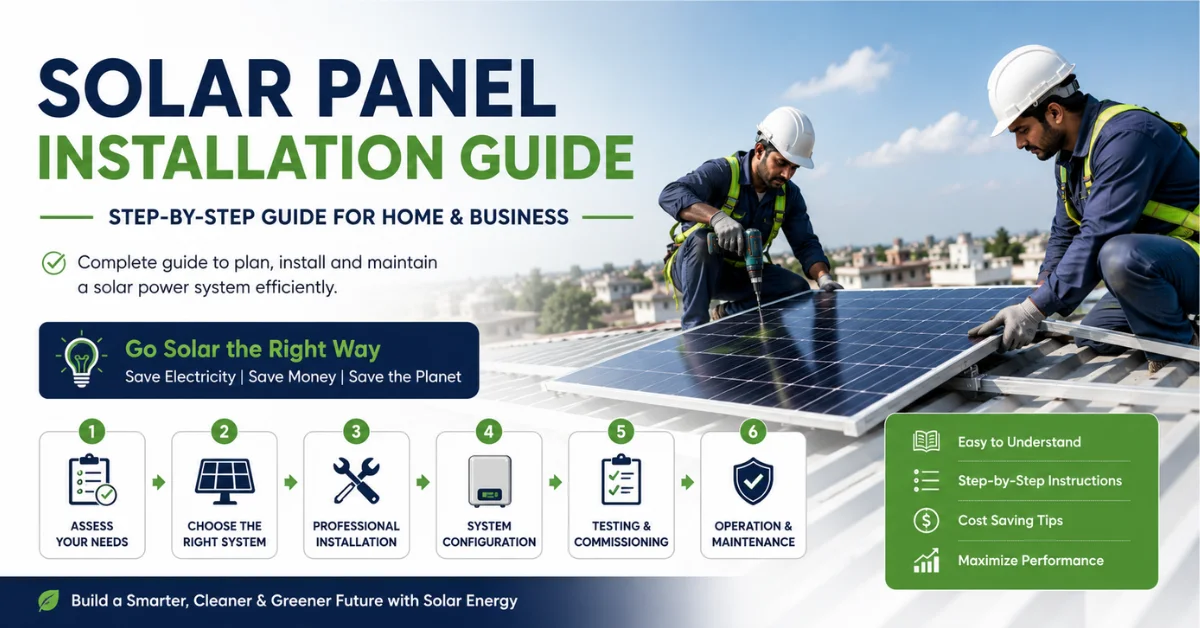
Solar Panel Installation Guide – Complete Step-by-Step Guide for Pakistan
The installation of solar panels is one significant way of getting clean and economical electricity for the home, office, farm, and business. Well-constructed solar systems have the potential to generate electricity for many years while minimizing dependence on the electricity grid.
There are several steps in the process of installing solar panels, including site evaluation, energy analysis, designing the solar system, mounting structures, solar panels installation, inverter installation, electrical wiring, safety measures, testing, and commissioning of the solar system.
While general information will give you some insight into the process of installing solar panels, electrical connections and roof installations are better left to professionals because solar panels produce DC current whenever there is sunlight.
What Is Solar Panel Installation?
Solar panel installation involves fixing the photovoltaic panels and linking them to the inverter, electrical safety gear, and batteries if needed, together with the building’s electrical system.
Common components of a solar panel installation can be as follows:
- Solar panels
- Solar inverter
- Fixing framework
- DC solar cables
- AC cables
- DC isolator
- AC safety devices
- Surge protection
- Earthling system
- Battery pack for hybrid/off-grid installation
- Monitoring system
Read More: 10kW Solar System Price in Pakistan 2026 – Latest Price List
Types of Solar Systems
It is advisable to select the right solar system before installing it.
On-Grid Solar System
The on-grid solar system is connected to the electricity grid. Usually, this system does not use any batteries and produces solar energy for consumption at the building while the excess is exported through the grid system, depending on the type of electricity agreement. The on-grid system is appropriate for individuals who wish to reduce their electricity bills while having reliable access to the grid system.
Hybrid Solar System
This system comprises of the solar panels, batteries, inverters, and electricity grid. The hybrid system stores the excess solar energy and generates electricity during grid failure. Hybrid systems are common among residences that desire to save money on electricity and get backup electricity.
Off-Grid Solar System
This solar system functions independently of the electricity grid. It needs adequate battery capacity to produce electricity even when there is no sun or when solar production is low. Such systems are appropriate for areas that cannot rely on the grid electricity.
Solar Panel Installation Process
1. Determine Your Electricity Consumption
In order to find out how much electricity is consumed at the premises, you need to analyze your previous electricity bills and specify which appliances consume the most energy.
Common loads include:
- Air conditioners
- Refrigerators
- Fans
- Water pumps
- Washing machines
- Televisions
- Computers
- Lights
- Kitchen appliances
2. Choose the Size of the Solar Power System
Solar power system size should be selected taking into account electricity consumption, available roof area, budget and degree of backup required.
Common residential system sizes include:
- 3kW
- 5kW
- 7kW
- 10kW
- 12kW
- 15kW
- 20kW
3. Inspect the Installation Site
A site survey is performed before installation. The installer checks:
- Available roof space
- Roof condition
- Shading
- Roof orientation
- Roof angle
- Structural strength
- Access to the electrical distribution board
- Suitable inverter location
4. Choose the Solar Panels
Nowadays, most of modern solar power systems use monocrystalline panels because of their high power output and efficiency.
Solar panels are produced in various power ratings like 450W, 550W, 580W, 585W, 600W, 650W and others. Selection of solar panels should be done considering efficiency, size, warranty, temperature coefficient, manufacturer quality and compatibility with inverter.
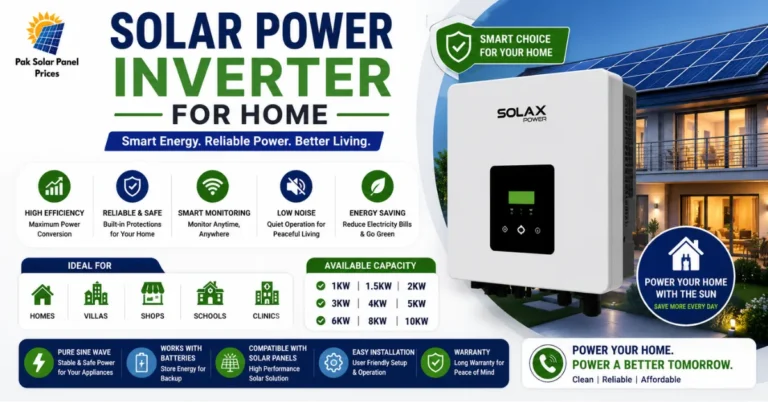
5. Select the Solar Inverter
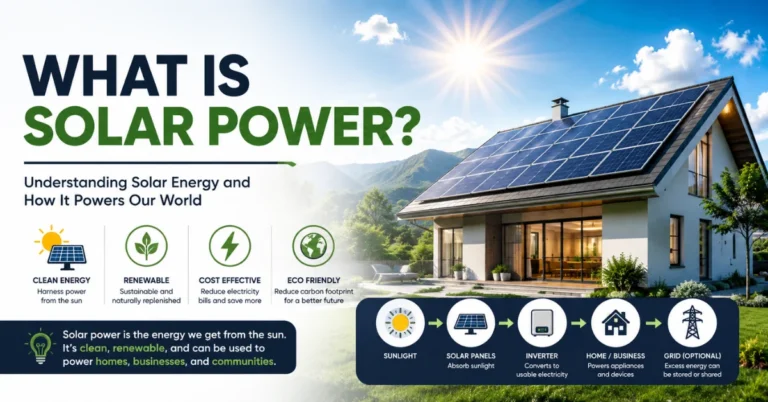
Inverter is one of the most essential components of the solar power system. It converts direct current (DC) generated by panels into alternating current (AC) for household appliances.
Popular inverter brands available in Pakistan include:
- Crown
- Inverex
- Growatt
- Solis
- GoodWe
- Huawei
- Sungrow
- Fronius
- Knox
- Livoltek
- Deye
6. Install the Mounting Structure
The mounting structure supports the solar panels and keeps them securely positioned.
A quality mounting structure should:
- Be strong enough for local weather conditions
- Resist corrosion
- Be properly anchored
- Maintain the required panel angle
- Allow adequate drainage
- Avoid unnecessary shading
7. Mount the Solar Panels
Once the framework has been assembled, the solar panels are mounted with proper clamps and mounting brackets. Panels should not be stepped on or positioned such that they can be damaged. Proper spacing should be maintained, and panels should be secured appropriately.
8. Connect Solar Panels
Connecting the solar panels involves the use of proper PV cables and connections. The panels can either be connected in series or parallel according to the requirements of the inverter. Series connection requires the string to stay within the maximum PV voltage and current ratings of the inverter. As the voltage from the solar strings is very high and dangerous DC voltage, it should be done by a qualified installer.
9. Solar Inverter Installation
The inverter should be installed in a clean, dry, and adequately ventilated location.
Avoid placing the inverter in areas exposed to:
- Direct rain
- Excessive heat
- Standing water
- Dust accumulation
- Restricted airflow
10. Install DC and AC Protection
A well-designed solar system will have adequate protection devices.
Depending on the system, these may include:
- DC isolators
- DC surge protection
- AC breakers
- AC surge protection
- Earthing
- Appropriate fuses
11. Connect the Battery
Batteries need to be connected for hybrid and off-grid solar systems. Proper battery voltage and battery type should match with the inverter.
Common options include:
- Tubular batteries
- AGM batteries
- Gel batteries
- Lithium batteries
- LiFePO4 batteries
12. Connect the System to the Electrical Network
The inverter is connected to the property’s electrical distribution system according to the approved system design. The installer should ensure that cable sizes, breakers, earthing, and protection devices are appropriate for the system capacity.
13. Configure the Inverter
After electrical connections are completed, the inverter is configured according to the solar system design.
Settings can include:
- Battery type
- Charging parameters
- Grid settings
- Operating mode
- Solar priority
- Battery priority
- Backup settings
14. Test the Solar System
Before commissioning, the installer should test:
- Solar panel output
- DC voltage
- AC voltage
- Inverter operation
- Battery charging
- Grid connection
- Protection devices
- Monitoring system
Read More: 5kW Solar System Price in Pakistan 2026 – Complete Investment Guide for Homeowners
Direction of Solar Panels in Pakistan
In most places of Pakistan, the solar panels are usually set up facing south in order to receive sufficient sunlight all through the day. The direction can change based on many factors like the latitude of that particular place, roof setup, shading, among others. Solar software can help in determining the best direction.
Common Solar Installation Mistakes
Avoid the following problems:
- Installing panels in shaded areas
- Using undersized cables
- Poor-quality mounting structures
- Incorrect inverter sizing
- Improper earthing
- Poor cable management
- Ignoring roof condition
- Installing panels without considering future maintenance
- Using incompatible batteries
- Choosing an installer based only on the lowest price
Solar Panel Installation Safety
Solar panel installation involves electrical and rooftop hazards. Important safety measures include:
- Use appropriate personal protective equipment
- Avoid working on wet roofs
- Use proper fall protection
- Keep unauthorized people away from the work area
- Never touch exposed DC conductors
- Follow inverter shutdown procedures
- Use correctly rated electrical equipment
- Have qualified professionals perform electrical work
Solar Panel Installation Costs
The cost of installation depends on the capacity of the solar system, the brand of the panel, inverter, mountings, wires, protective devices, batteries, and labor. The smaller the capacity of the residential system, the lower the installation cost compared to the larger commercial or hybrid system. Battery storage will add a considerable cost to the installation.
It is recommended that you request a quote from the installer and ensure that all details of your system are provided including the brand of panels, inverter, batteries, etc.
Read More: 600 Watt Solar Panel Price in Pakistan 2026 – Buyer’s Checklist, Latest Prices & Performance
How to Choose a Solar Installer
A reliable installer should provide:
- Detailed system design
- Exact equipment specifications
- Clear pricing
- Written warranty information
- Proper electrical protection
- Professional installation
- After-sales support
- Maintenance guidance
Solar Panel Installation Checklist
Before installation:
- Check electricity consumption
- Select the appropriate system type
- Inspect the roof
- Check shading
- Compare solar panels
- Compare inverter options
- Decide whether batteries are required
- Obtain detailed quotations
- Verify warranties
During installation:
- Check mounting structure
- Confirm panel placement
- Verify cable routing
- Check inverter location
- Ensure proper earthing
- Install electrical protection
After installation:
- Test system output
- Check inverter settings
- Confirm battery operation
- Activate monitoring
- Keep warranty documents
- Record the initial system performance
Conclusion
An ideal Solar Panel Installation Guide needs to contain a lot more information beyond merely installing solar panels onto the roof. Right-sizing the system, site inspection, panel selection, inverter suitability, installation of the system, wiring, safety measures, battery arrangement, and lastly the testing process all need to be considered to achieve optimal solar power generation.
Quality equipment and the services of a professional installer can go a long way in minimizing problems for property owners in Pakistan who want to install solar power. A well-designed and installed solar system will provide clean energy and reliable power for decades to come.
 Join Channel