

Latest Solar Panel Prices in Pakistan 2026 | A Grade & Bifacial Panels
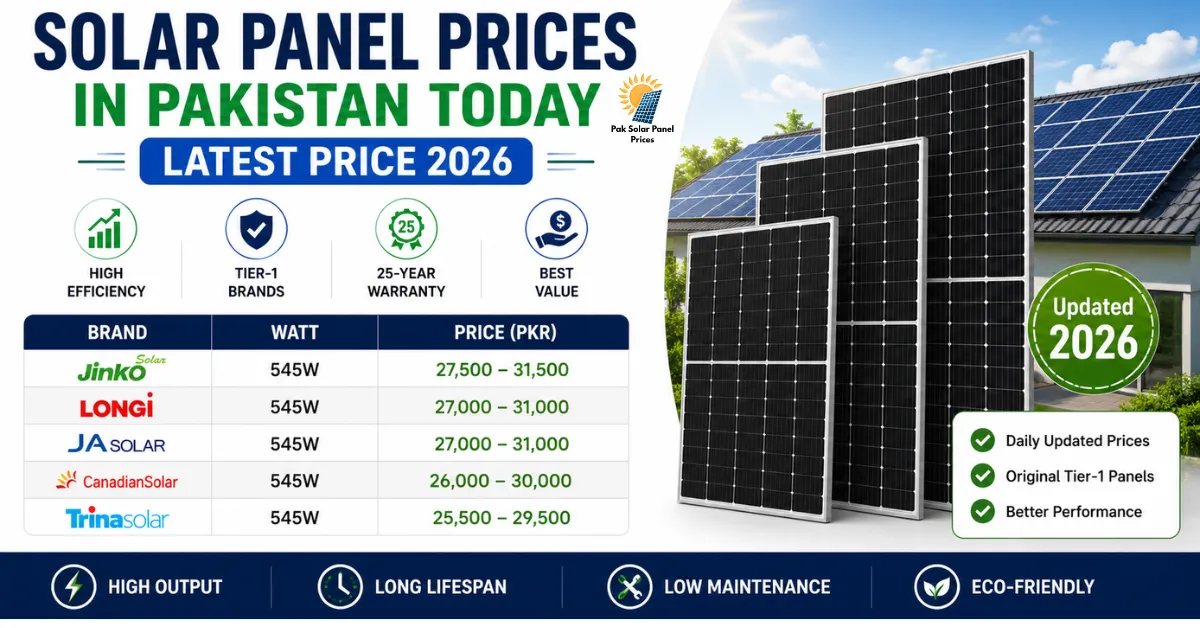
A-grade solar panels in Pakistan generally cost between PKR 27 and PKR 45 per watt, depending on cell technology and brand. But solar pricing here isn’t a single number it depends on panel technology, brand, system size, and even which city you’re buying from. Solar Panel Prices in Pakistan pulls together the current market picture so you know what you’re actually paying for before you sign a quote.
Solar Panel Price in Pakistan 2026 – Per Watt Rate
As of mid-2026, A-grade solar panel prices in Pakistan generally fall in the PKR 27 to PKR 50 per watt range, depending on the brand, cell technology, and wattage of the panel. Budget-friendly monofacial panels sit at the lower end, while premium N-type bifacial panels from top-tier brands are priced higher because they generate more units per panel over their lifetime.
A rough breakdown looks like this:
| Panel Type | Price per Watt (PKR) |
|---|---|
| Standard A-grade monofacial | 27 – 33 |
| Mid-range Tier-1 panels | 33 – 40 |
| Premium N-type / bifacial | 40 – 50 |
Read More: Jinko Tiger Neo 585W Solar Panel Price in Pakistan 2026 | Latest Market Rates
Where the Price Difference P-Type vs N-Type:
Solar panels in Pakistan are broadly split into two silicon cell categories:
For most homeowners, P-type panels still deliver solid value. N-type makes more sense if roof space is limited and you need to squeeze out maximum output per square foot, or if you want the longest possible panel lifespan.
Brand-Wise Price in Pakistan
| Brand | Approx. Price per Watt (PKR) | Known For |
|---|---|---|
| Longi | 28 – 44.5 | Market leader, strong efficiency, wide availability |
| Jinko | 28.5 – 44 | Reliable Tier-1 option, good balance of cost and performance |
| Canadian Solar | 27 – 49.6 | Durable, well-suited to Pakistan’s climate |
| JA Solar | 26 – 54 | Competitive pricing, various technology tiers |
| Trina Solar | 26.5 – 53 | Popular cost-effective choice among installers |
| Astro Energy / RENA Solar | 26.5 – 29 | Among the cheapest genuine A-grade options |
These ranges shift almost daily based on the dollar exchange rate and international shipment costs, so treat them as a general benchmark rather than a fixed price always ask for a same-day quote before purchasing.
Read More: Fronus Inverter Price in Pakistan 2026 – Latest Models, Specifications & Buying Guide
A-Grade vs B-Grade
This distinction matters more than most buyers realize:
If you’re building a permanent home or commercial system especially one you plan to connect to the grid A-grade is non-negotiable. B-grade panels only make sense for off-grid, non-critical setups like sheds, street lighting, or temporary structures.
System Costs by Size in Pakistan
Panel price is only one part of the bill. A complete installed system also includes the inverter, mounting structure, wiring, and labor and for hybrid setups, batteries. Rough all-in installed costs currently look like this:
| System Size | On-Grid Cost (PKR) | Hybrid (with battery) Cost (PKR) |
|---|---|---|
| 3 kW | 350,000 – 500,000 | 500,000 – 700,000 |
| 5 kW | 700,000 – 1,000,000 | 900,000 – 1,200,000 |
| 10 kW | 950,000 – 1,200,000 | 1,400,000 – 2,000,000+ |
Hybrid systems cost more upfront because of the battery bank, but they’re the only option that keeps your appliances running during an actual outage a plain on-grid system shuts off automatically when the grid goes down, for safety reasons.
Why Prices Keep Shifting
A few forces are constantly moving the needle on solar pricing in Pakistan:
City-Wise Solar Panel Price in Pakistan
| City | General Trend |
|---|---|
| Karachi | Lowest average rates, direct port access |
| Lahore | Largest solar market, competitive due to high demand and bulk imports |
| Islamabad/Rawalpindi | Slightly higher due to premium demand, though Rawalpindi stays competitive with dense dealer presence |
| Faisalabad | Strong industrial demand, especially from textile units |
| Multan | High solar irradiance panels here often generate more output per watt due to sunlight intensity |
Common Buyer Mistakes to Avoid
Read More: AGS Battery Price in Pakistan 2026 – Latest Price List, Models & Buying Guide
Real Payback Time: A Practical Example
Most articles quote per-watt prices but skip the actual math buyers care about when does the system pay for itself? Here’s a simplified example using a common household setup:
A 5kW hybrid system costing roughly PKR 1,000,000 (installed, with battery) in a home consuming around 25–30 units per day:
Comparison Solar vs Generator
A lot of Pakistani households default to a generator as backup without comparing the real long-term cost against solar:
| Factor | Petrol/Diesel Generator | Solar System (5kW hybrid) |
|---|---|---|
| Upfront cost | PKR 80,000 – 250,000 | PKR 900,000 – 1,200,000 |
| Running cost | PKR 500,000+/year (fuel, at daily 4-hour use) | Near zero after installation |
| Noise & maintenance | High — oil changes, servicing, noise | Minimal occasional cleaning |
| Lifespan | 5–8 years | 20–25 years |
| Break-even vs solar | N/A | Solar pays for itself in 2–4 years of generator fuel costs |
The generator looks cheaper on day one, but over a 5-year horizon, fuel costs alone usually exceed what a mid-sized solar system would have cost outright without accounting for engine wear, noise, and the fact that fuel prices in Pakistan almost never go down.
How Region Affects Real-World Output
Two identical panels bought at the same price won’t necessarily produce the same electricity depending on where they’re installed:
This matters because a buyer in Multan and a buyer in Islamabad paying the exact same per-watt price won’t get the same return something almost no pricing guide accounts for, even though it directly affects your real payback period.
Financing and Installment Options
Given how large upfront solar costs can be, several banks and solar companies in Pakistan now offer structured payment routes worth knowing about:
Paying in installments almost always costs more in total than paying cash upfront, but it can make sense if it lets you install a properly sized hybrid system now instead of settling for an undersized on-grid-only setup you can afford outright.
Read More: AGS Battery Price in Pakistan 2026 – Latest Price List, Models & Buying Guide
Red Flags When Choosing an Installer
Panel price gets all the attention, but installation quality often determines whether you actually get the output you paid for:
Conclusion
Solar panel prices in Pakistan currently range from roughly PKR 27 to PKR 45 per watt for standard A-grade panels, with premium N-type options going higher. The right choice depends less on chasing the lowest price per watt and more on matching panel grade, brand warranty, and system design to how you actually plan to use the power self-consumption, grid backup, or full off-grid independence. Getting an itemized, documented quote before committing is still the single best way to avoid overpaying or ending up with equipment that can’t even be registered for net metering.
 Join Channel