

How Much Electricity Does a Solar Panel Produce? Daily & Monthly Output
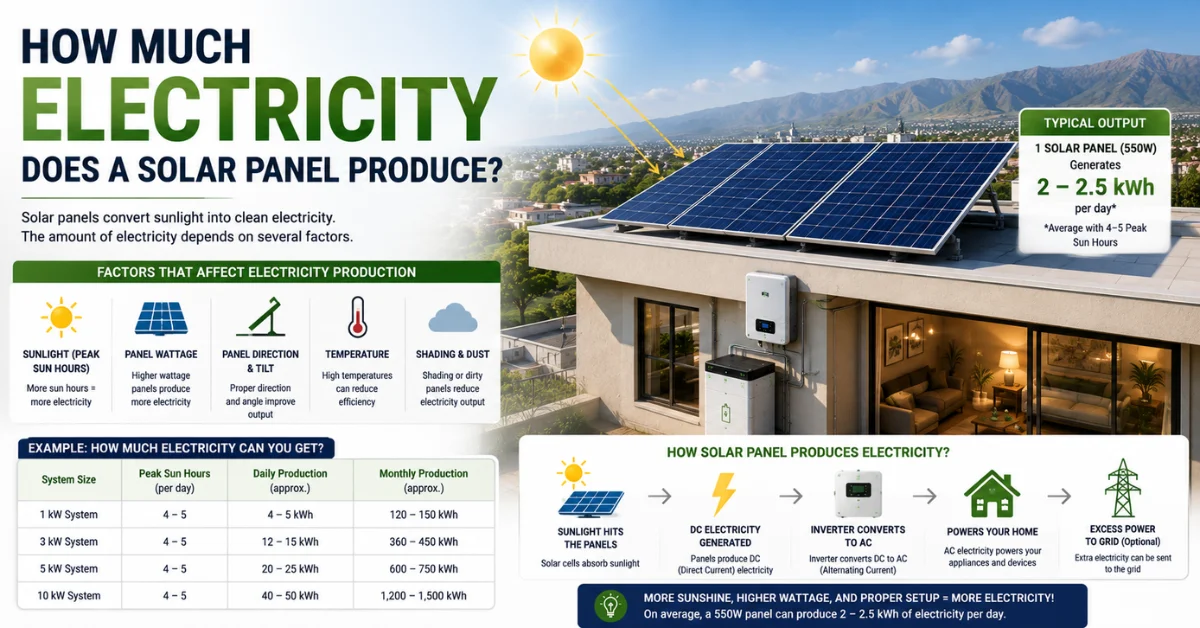
The amount of electricity a solar panel produces depends on its wattage, sunlight hours, weather, temperature, panel efficiency, shading, orientation and system losses. A 550W solar panel, for example, does not produce 550 watts continuously throughout the entire day.
In case of home solar systems in Pakistan, knowledge about the real power generation from a solar panel becomes very crucial while determining the solar system size, saving on electricity and the number of panels needed.
Solar Panel Electricity Production by Wattage
| Panel Wattage | Approx. Theoretical Daily Output | Approx. 30-Day Output |
|---|---|---|
| 400W | 2.00kWh | 60kWh |
| 450W | 2.25kWh | 67.5kWh |
| 500W | 2.50kWh | 75kWh |
| 550W | 2.75kWh | 82.5kWh |
| 580W | 2.90kWh | 87kWh |
| 600W | 3.00kWh | 90kWh |
| 650W | 3.25kWh | 97.5kWh |
Does a Solar Panel Produce Electricity All Day?
No. There is variation in production depending on time. During early mornings and late evenings, there is lower production due to less sunlight. It is possible that maximum production occurs at the peak sunlight. Production is also affected by clouds, haze and other weather. In this regard, it would be wrong to think that a 550W panel produces 550W through 10 to 12 hours daily.
Read More: Today Solar Panel Rate in Pakistan – Updated Price List, Market Trends & Buying Guide
What Affects Solar Panel Electricity Production?
Several factors influence actual output.
Sunlight Availability
- Greater and more intense sunlight provides higher electricity production.
Temperature
- Higher temperatures might affect solar panels’ output. The hot summer weather in Pakistan can therefore have an effect on actual output.
Dust and Dirt
- Dust accumulation blocks some sunlight from reaching the photovoltaic cells. This can be particularly relevant in dusty areas.
Shading
- Tress, buildings, walls and other rooftop structures reduce the output of solar panels due to casting shade.
Panel Orientation
- Poor positioning can reduce the amount of useful sunlight received by the panels throughout the day.
Panel Condition
- If the module is damaged, it will produce less electricity than its rated output.
How Much Does Weather Affect Solar Output?
Weather is the factor that makes daily production vary greatly. Clear weather allows solar system to work close to its actual potential. Haze or cloudiness reduces the amount of sunlight received by the panels. In the case of cloudy weather, solar panels are still able to produce electricity, though at much lower level compared to clear sky condition. That is the reason why production should be estimated for longer periods rather than on a cloudy or clear day.
Does Summer Produce More Solar Electricity?
The longest period of daylight hours is observed in summer, which means that more chances for solar production exist. However, very high temperatures reduce the efficiency of solar panels. Winter is characterized by shorter days, though cooler temperatures increase instantaneous efficiency of solar panels. Therefore, the season with maximum daily output is not determined by the number of daylight hours.
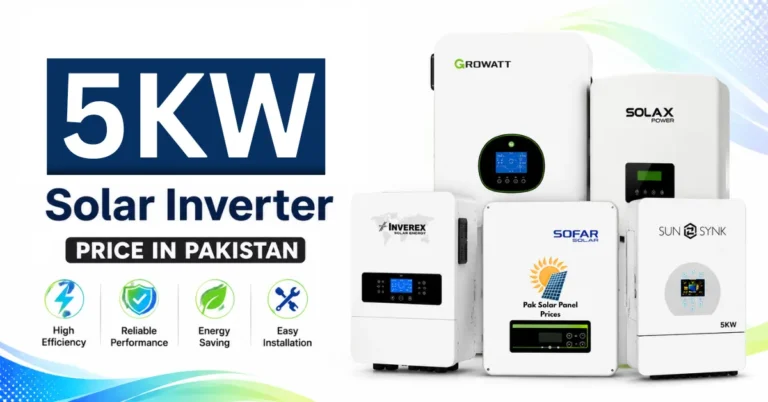
Read More: 5kW Solar Inverter Price in Pakistan 2026 – Latest Prices, Top Brands & Complete Buying Guide
How Much Electricity Does a Solar Panel Produce in Pakistan?
Solar electricity production in Pakistan can be quite strong because many regions receive substantial sunlight throughout the year. However, production varies by city, season, weather, panel orientation, and system design.
For example, a solar panel installed in Lahore, Islamabad, Multan, Bahawalpur, Faisalabad, Karachi, Peshawar, or Quetta can have different generation patterns because local weather and solar conditions vary. A simple estimate can be made using:
- Daily Output = Panel Capacity × Peak Sun Hours × Performance Ratio
Solar Panel Output vs Inverter Output
The electricity generated by the panels is not always identical to the electricity available at the appliances. A solar system contains multiple components, including cables, connectors, an inverter and sometimes a battery. Each stage can introduce some energy loss.
For example, a panel array may have a nominal capacity of 6kW, but actual AC power available to household appliances will change throughout the day and may be lower than the theoretical DC rating.
How Many Units Does a Solar Panel Produce Per Day?
In Pakistan, a modern solar panel can potentially generate roughly 1.5 to 3+ units of electricity per day, depending mainly on its capacity and sunlight conditions.
| Panel | Approx. Daily Production* |
|---|---|
| 450W | 1.8 units |
| 550W | 2.2 units |
| 600W | 2.4 units |
| 650W | 2.6 units |
| 700W | 2.8 units |
How Can You Check Actual Solar Production?
There are many modern inverters available that have the capability of measuring the output through a monitor or an application. These can include:
- Generation of current solar power
- Daily energy production
- Monthly generation
- Total lifetime generation
- Household consumption
- Grid import and export
- Battery charging and discharge
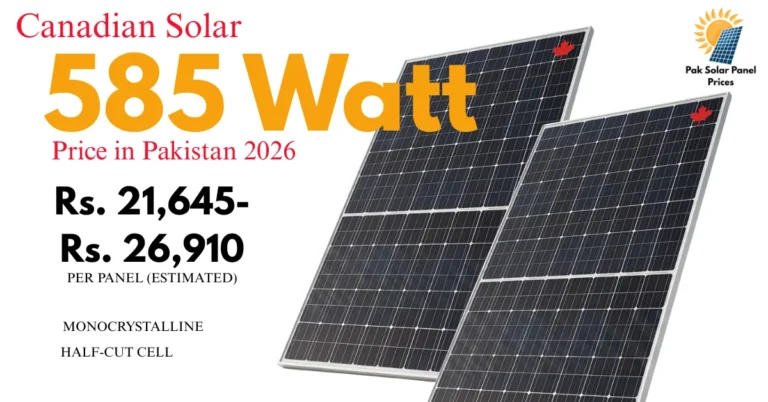
Read More: Jinko Tiger Neo 585W Solar Panel Price in Pakistan 2026 | Latest Market Rates
Solar Panel Output in Summer vs Winter
The production of solar panels varies depending on the season.
Summer
Summer has long days with intense solar energy, hence favoring the production of lots of electricity. On the other hand, extremely hot panels reduce their efficiency at any one time.
Winter
Winters usually have few hours of light, and the weather can either be cloudy or foggy, which leads to reduced production. Cold weather may enhance efficiency in some areas; however, there will still be reduced electricity produced due to less sunlight availability.
How Can You Increase Solar Panel Electricity Production?
Here is how you can improve the output of solar panels by not just purchasing high wattage panels:
Useful measures are:
- Maintain your panels clean.
- Reduce shade.
- Use an appropriately rated inverter.
- Install panels at a suitable orientation and tilt.
- Make use of appropriate quality cables and connectors.
- Measure your solar output daily and monthly.
- Inspection of your solar system.
- Avoid unnecessary shading from new structures or trees.
- Choose panels with suitable efficiency and performance characteristics.
- Have the system professionally designed and installed.
Conclusion
Solar panels’ energy generation does not only depend on the number of watts of the panel. For instance, a 550W panel does not produce 550W constantly, and the amount of energy produced in a day is affected by several factors including light intensity, temperature, weather, shading, dust among others.
A simple illustration is that a 550W panel getting five peak sun hours will generate 2.75kWh of energy per day while a 600W will generate 3kWh.


 Join Channel