

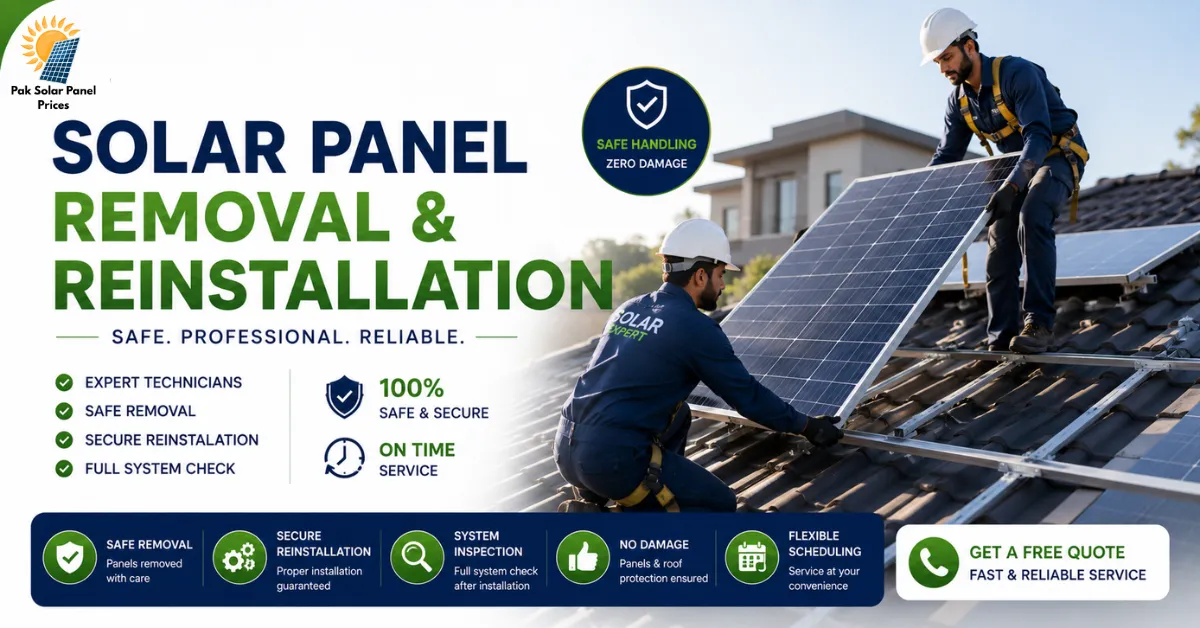
Solar Panel Removal and Reinstallation for Roof Replacement – Complete Guide
Solar panels are built to last 25–30 years or more, but roofs, homes, and life circumstances don’t always cooperate on that same timeline. At some point, many solar owners find themselves needing to temporarily remove their panels usually for a roof repair, a system upgrade, or a move to a new property. This guide breaks down everything you need to know about solar panel removal and reinstallation. why it’s needed, how the process actually works, what it costs, how long it takes, and the mistakes that can turn a routine job into an expensive one.
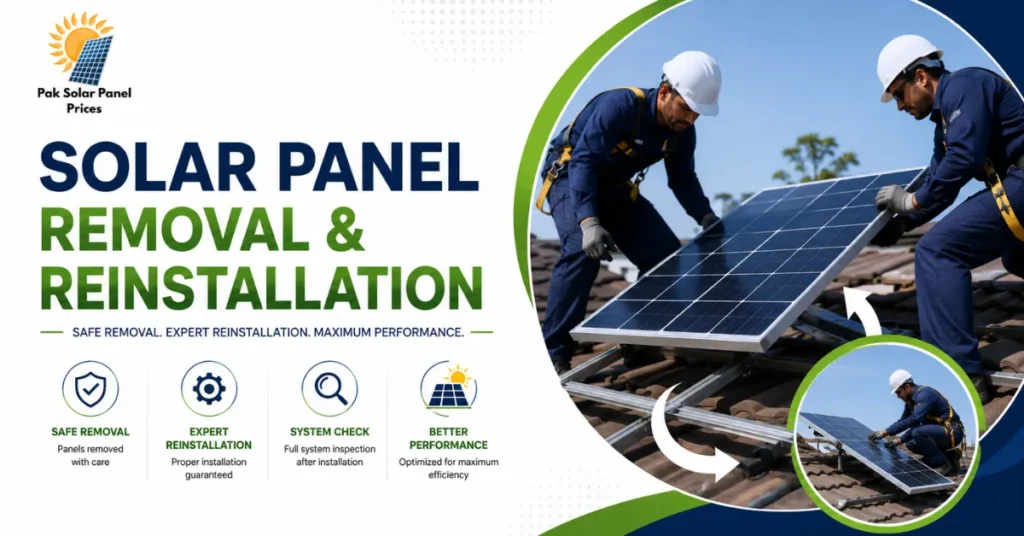
Why Solar Panels Need to Be Removed and Reinstalled
There are several common triggers for a removal-and-reinstall project:
Read More: Hybrid Solar System Price Today – Packages, Installation & Cost 2026
The Step-by-Step Removal and Reinstallation Process
While every solar company has its own workflow, the core process generally follows these stages:
1. Assessment and Planning
A technician evaluates your system’s condition, roof type, and the scope of work needed. You’ll get a cost estimate and timeline, and this is the stage where you coordinate schedules with a roofer if repairs are involved.
2. System Shutdown
Before anything is touched, the system is safely de-energized and disconnected from the electrical grid. This step is non-negotiable — working on a live solar system is a serious safety hazard.
3. Panel Removal
Panels are carefully detached from the racking system using specialized tools to avoid cracks, scratches, or micro-fractures. Each panel is typically labeled and organized so it can be reinstalled in the same position, which matters for performance and warranty purposes.
4. Hardware Removal
Racking, rails, mounting feet, and wiring are removed from the roof. Any roof penetrations left behind (from lag bolts or screws) are usually sealed temporarily to prevent water intrusion until the roof work is complete.
5. Storage and Transport
If panels aren’t going straight back onto the same roof, they’re moved to secure, climate-controlled storage — protected from moisture and extreme temperatures to preserve their efficiency.
6. Roof Repair or Replacement
This is where the roofing crew takes over. Solar reinstallation should never begin until the roof surface is fully repaired, inspected, and approved.
7. Reinstallation
The mounting system goes back up first, checked for secure attachment and correct alignment. Panels are then reattached, reconnected to inverters, and the wiring is re-established.
8. Testing and Recommissioning
The system is reconnected to the grid, tested for proper function, and in most cases, the utility company is notified to confirm everything is running correctly.
How Long Does It Take?
Timelines vary based on system size, roof type, and whether roof repairs are involved, but here’s a general guide:
| Project Type | Estimated Timeline |
|---|---|
| Small residential removal only | 1 day |
| Small residential reinstallation only | 1 day |
| Full residential removal + reinstall (no major roof work) | 2–3 days |
| Residential project with roof replacement | Removal, then a wait of 1–2 weeks for roofing, then 1 day reinstall |
| Commercial (50–100 kW system) | 3–5 days removal, 8–10 days reinstallation and commissioning |
The bigger the gap between removal and reinstall, the more energy production and savings you lose, so tight coordination between your solar company and roofer matters.
Solar Panel Removal and Reinstallation Cost
Costs depend on system size, roof height and pitch, roof material, number of roof faces, and whether storage or transport is needed. As a rough benchmark, industry pricing often lands somewhere in the range of $150–$500 per panel, with a typical residential project totaling a few thousand dollars once labor, materials, and any hardware replacement are factored in.
Costs can increase if:
Tip: Ask your provider whether your homeowner’s insurance covers removal and reinstallation some policies do if the work is tied to storm damage or another covered event.
Read More: Home Solar System Price in Pakistan 2026 – Complete Cost Guide
Can You Remove and Reinstall Solar Panels Yourself?
Technically, yes but it’s rarely a good idea. Here’s why professionals strongly discourage DIY removal:
Unless you’re a licensed solar technician, this is one home project best left to professionals.
How to Choose the Right Company for the Job
Not every roofer or handyman is qualified to handle solar equipment. When hiring for a removal-and-reinstall project, look for:
Conclusion
Solar panel removal and reinstallation is a routine part of long-term solar ownership not a sign that something has gone wrong. Roofs need maintenance, systems get upgraded, and homes change hands. The key to a smooth process is hiring certified professionals, planning around your roofing timeline, and understanding the costs upfront so there are no surprises.
Done right, your system will come back online performing just as well as the day it was first installed protecting both your roof and your solar investment for decades to come.




 Join Channel