

Solar Panel Output in Summer vs Winter in Pakistan – Complete Guide
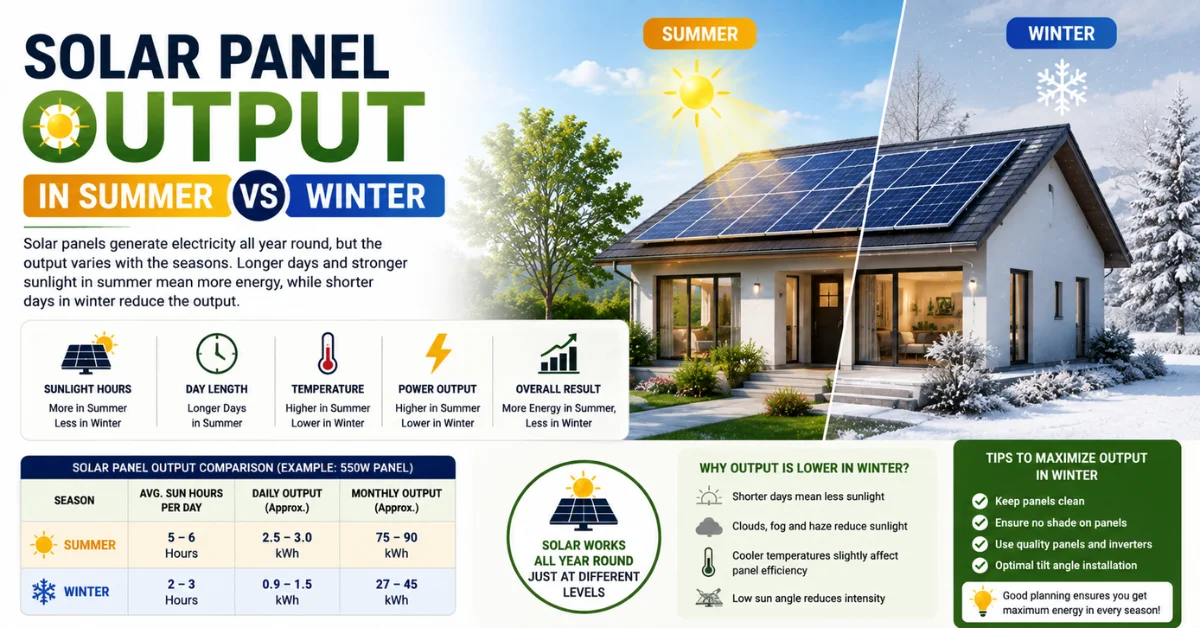
Solar panels generate electricity throughout the year, but their output does not remain the same in every season. Output in Summer vs Winter can produce noticeably different solar generation because sunlight duration, solar radiation, cloud cover, temperature and atmospheric conditions change during the year.
In Pakistan, this difference is particularly important for homeowners planning a solar system. Summer usually brings longer daylight hours and strong sunlight, while winter has shorter days and can experience more fog, haze and cloudy weather in some areas.
However, one common misunderstanding is that hotter weather automatically means higher solar panel output. Solar panels actually perform more efficiently at lower cell temperatures, so the relationship between temperature and generation is more complicated.
Why Solar Panel Output Changes With the Seasons
Solar panels generate electricity by converting sunlight into usable power through photovoltaic (PV) cells. Since sunlight availability naturally shifts with the seasons, it’s only logical that solar output follows the same pattern.
Several factors directly affect how much energy your solar panels produce:
- Daylight hours: Summer days are longer, giving panels more time to absorb sunlight.
- Sun angle: The sun sits higher in the sky during summer, allowing more direct exposure to panels.
- Cloud cover and weather: Winter often brings more clouds, rain, or snow, which can block sunlight.
- Panel temperature: Interestingly, panels can lose some efficiency in extreme heat, which we’ll explain below.
Read More: 5kW Solar System Price in Pakistan 2026 – Complete Investment Guide for Homeowners
Winter Does Not Mean Solar Panels Stop Working
Solar panels keep working in winter. They don’t need high temperatures to produce energy. They need sunlight. Actually, photovoltaic cells tend to work better in cooler environments, provided there is enough sunlight. The reason for lower production rates in winter is mostly linked to fewer sunny hours, lower sun angle, and weather conditions, rather than cold weather itself.
Solar Panel Output in Summer vs Winter Comparison
| Factor | Summer | Winter |
|---|---|---|
| Daylight Duration | Longer | Shorter |
| Sun Position | Higher | Lower |
| Panel Temperature | Higher | Lower |
| Panel Efficiency | Can decrease due to heat | Can improve in cooler conditions |
| Solar Generation Opportunity | Generally higher | Generally lower |
| Fog/Haze Impact | Usually lower in many regions | Can be significant |
| Household Cooling Load | Higher | Lower |
| Overall Production | Often higher | Often lower |
How to Maximize Solar Panel Output All Year Round
Whether Output in Summer vs Winter, there are practical steps you can take to keep your solar system running efficiently throughout the year.
- Keep panels clean: Dust, pollen, and debris in summer, or snow and ice in winter, can block sunlight and reduce output.
- Check panel angle and placement: A properly angled installation can help capture more sunlight during both high-sun summer months and low-sun winter months.
- Trim nearby trees: Overhanging branches can cast shadows that worsen already-reduced winter sunlight.
- Monitor your system regularly: Use your solar inverter’s app or monitoring dashboard to track performance and catch issues early.
- Consider battery storage: Storing excess summer energy can help offset lower winter production, giving you more consistent power access year-round.
Read More: Flexible Solar Panel Price in Pakistan 2026 – Latest Prices & Buying Guide
How to Maintain Solar Output in Both Seasons
A properly maintained solar system works better all around the year. It should be kept reasonably clean, production monitored using the inverter, new shading checked, and mounting and electrical connections inspected to remain in good shape. In the summer, proper ventilation under the panels comes in handy since temperatures on the roof can be very high. In the winter, production monitoring can help determine if the reduction is due to normal seasonal change, shading, fog, dirty panels, or something else.
Should a Solar System Be Sized for Winter?
A solar system should not be sized only based on the production day of summer. The design should be done considering the consumption of electricity throughout the year, seasonal production, and goals of the homeowner. If the aim is to reduce grid consumption all year round, then the winter production should be taken into consideration. For homes that need backup during nighttime, the batteries have to be sized individually as well.
Read More: 16kW Lithium Battery Price in Pakistan 2026 – Latest Cost, Brands & Backup Guide
How to Compare Your Summer and Winter Solar Production
Monitoring data is the easiest way to compare the seasonal performance of your solar system.
- Daily solar generation
- Monthly electricity production
- Peak power output
- Household consumption
- Grid import
- Battery charging and discharge
Conclusion
Solar panel during the Output in Summer vs Winter months is determined by the combined effect of sunlight, daylength, temperature, and weather conditions. During summer season in Pakistan, generation of electrical power is higher due to long days and strong solar radiation. High temperatures tend to affect negatively photovoltaic efficiency.




 Join Channel