

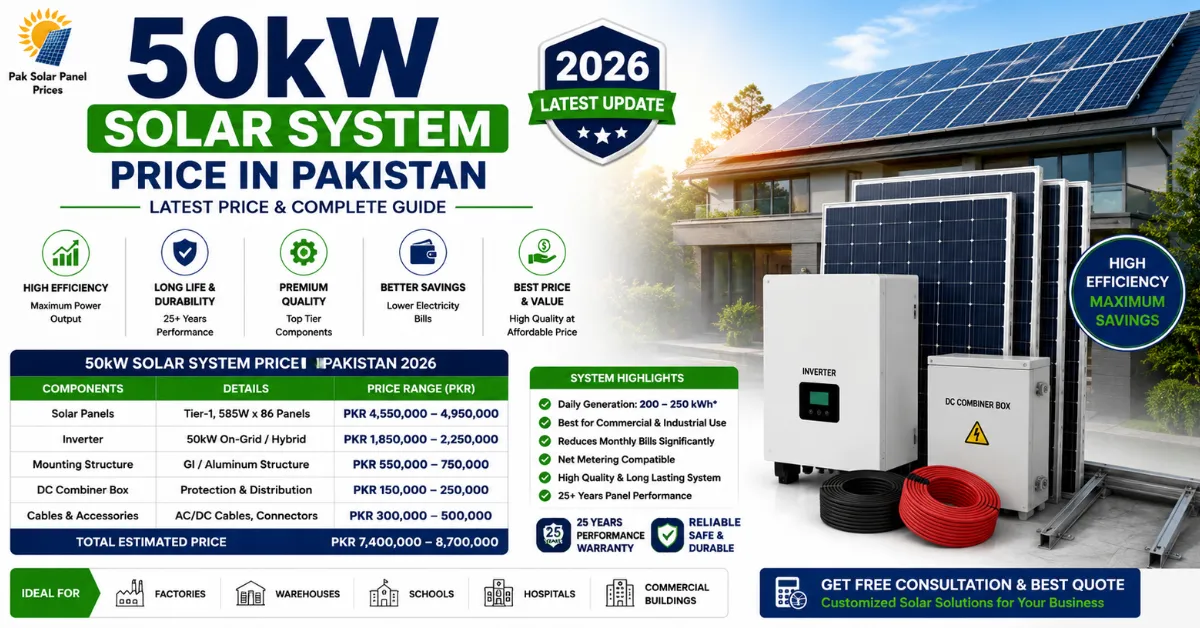
50kW Solar System Price in Pakistan 2026 – Commercial Cost, ROI & Installation Guide
A 50KW solar power generation plant is a highly advanced system designed for businesses that require a lot of power. Such installations are typically found in industries, textile mills, hospitals, universities, shopping centers, cold storages, ware-houses, hotels, and manufacturing plants where saving electricity becomes essential for increased profits.
Unlike a domestic unit, a 50KW setup is a business venture that needs to be engineered and analyzed before being set up. In case of proper installation, such a system could help produce sufficient electricity which would not only cover a substantial part of its daytime requirements but also provide handsome profits. The current prices of commercial 50KW systems in the Pakistani market run into millions of rupees.
50kW Commercial System Overview
| Specification | Details |
|---|---|
| Recommended Monthly Consumption | 5,000–7,000 Units |
| Daily Electricity Generation | 190–240 Units |
| Monthly Energy Production | 5,700–7,200 Units |
| Annual Energy Production | 69,000–87,000 Units |
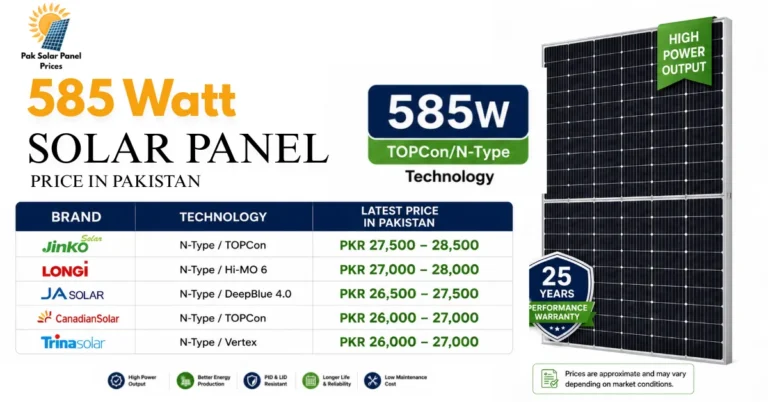
| Solar Panels Required | 81–86 Panels (585W–620W) |
| Roof Area Required | 3,600–4,300 sq. ft. |
| Recommended Inverter | 50kW Three-Phase On-Grid / Hybrid |
| Expected System Life | 25–30 Years |
Read More: 250 Watt Solar Panel Price in Pakistan 2026 – Today Updated Rates
Latest 50kW Solar System Price in Pakistan (2026)
| System Package | Estimated Price (PKR) |
|---|---|
| 50kW On-Grid Solar System | Rs. 4,200,000 – 4,900,000 |
| 50kW Hybrid Solar System | Rs. 5,000,000 – 6,200,000 |
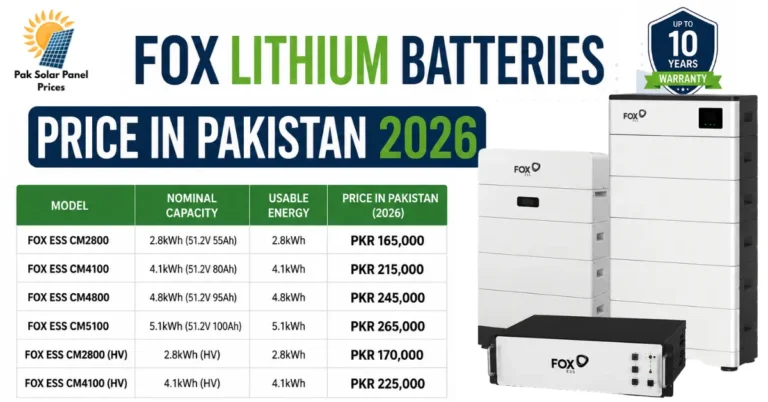
| 50kW Hybrid + 40kWh Lithium Battery | Rs. 6,200,000 – 7,500,000 |
| 50kW Hybrid + 60kWh Lithium Battery | Rs. 7,300,000 – 8,800,000 |
| 50kW Off-Grid Solar System | Rs. 7,500,000 – 9,500,000 |
Which Businesses Need a 50kW Solar System?
A 50kW system is ideal for organizations with continuous daytime electricity demand.
Typical users include:
- Textile Industries
- Rice Mills
- Flour Mills
- Schools & Universities
- Hospitals
- Hotels
- Marriage Halls
- Shopping Malls
- Corporate Offices
- Warehouses
- Cold Storage Facilities
- Petrol Pumps
- Manufacturing Plants
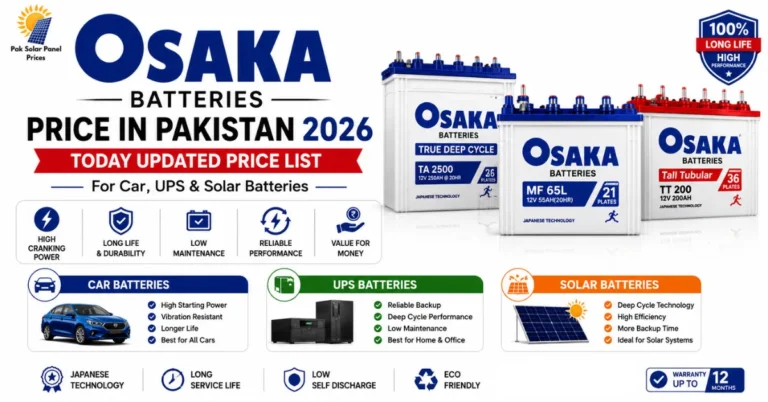
Read More; Osaka Battery Price in Pakistan 2026 | Today Updated Price List for Car, UPS & Solar Batteries
Estimated Electricity Generation
| Season | Average Output |
|---|---|
| Summer | 210–240 Units/Day |
| Winter | 170–200 Units/Day |
| Annual Average | 190–240 Units/Day |
Project Cost Breakdown
Knowing where your investment goes helps you compare commercial quotations.
| Component | Estimated Share |
|---|---|
| Tier-1 Solar Panels | 46% |
| Three-Phase Inverter | 18% |
| Mounting Structure | 8% |
| Lithium Battery (Optional) | 15–25% |
| Electrical Protection | 5% |
| Engineering & Installation | 8% |
What Can a 50kW Solar System Power?
A professionally designed installation can support:
- 20–30 Inverter Air Conditioners
- Industrial Lighting Systems
- Heavy Water Pumps
- Computer Labs
- Office Buildings
- Factory Machinery (depending on load)
- Cold Storage Equipment
- Restaurant Kitchens
- Elevators
- Security & CCTV Systems
- IT Servers
- Production Equipment
Why Commercial Businesses Prefer 50kW Systems
A 50kW solar installation offers several advantages over smaller systems.
- Significant reduction in electricity expenses
- Excellent return on investment
- Suitable for three-phase commercial supply
- Net-metering compatibility
- Low maintenance costs
- Long equipment lifespan
- Improved business energy security
- Scalable for future expansion
Commercial Installation Checklist
Before signing the project agreement, verify:
- Genuine Tier-1 solar panels
- Original three-phase inverter
- Structural engineering approval
- Surge protection devices
- Earthing resistance test
- Performance guarantee
- Warranty documentation
- Remote monitoring platform
- Professional commissioning report
Conclusion
The 50kW Solar System is one of the most economical options of renewable energy generation systems that can be used in commercial and industrial buildings in Pakistan. Although it involves high initial costs, its capacity of generating 200-240 units of energy per day, along with lowering costs and increasing opportunities for further development, makes it an extremely good choice. It is important to select tier-1 panels, an efficient three-phase inverter and the best EPC contractor.

 Join Channel