

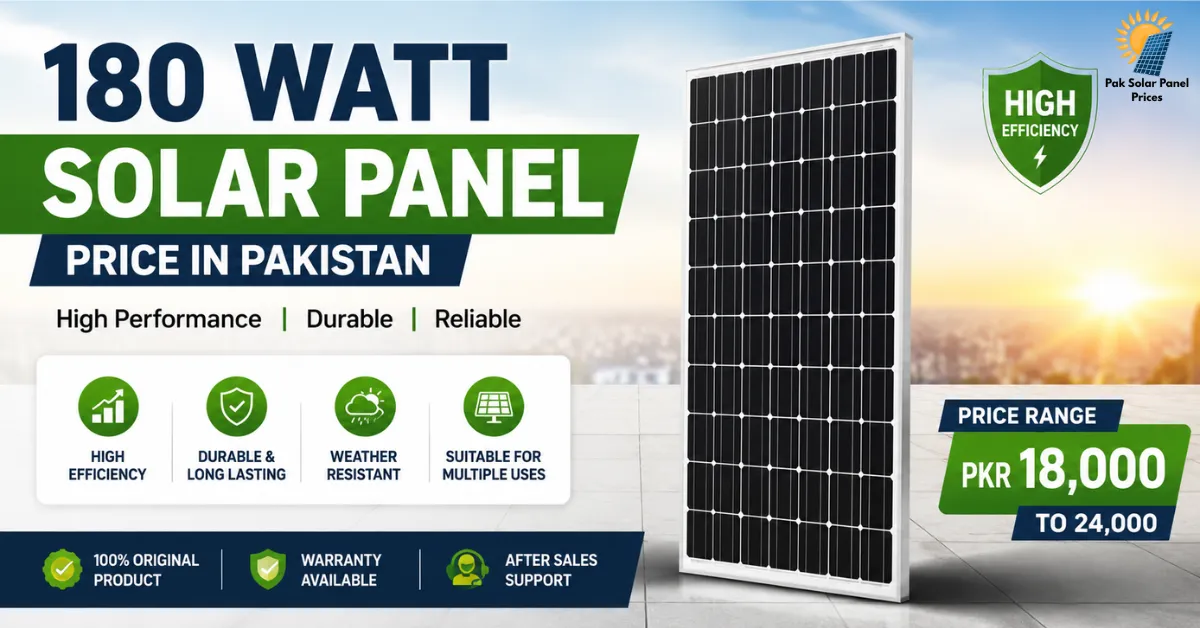
180 Watt Solar Panel Price in Pakistan Today – Brands, Features and Rates
Solar energy has become the go-to solution for Pakistani households dealing with high electricity bills and long load-shedding hours. Among the smaller panel sizes, the 180 watt solar panel remains one of the most searched options for people who want a low-cost, entry-level solar setup for fans, lights, and small appliances.
This guide covers the latest 180 watt solar panel price in Pakistan, the factors that affect the cost, how much electricity it produces, and what you should check before buying one.
180 Watt Solar Panel Price in Pakistan
| Panel Type | Price Range (PKR) | Approx. Per Watt Rate |
|---|---|---|
| Local/Unbranded 180W panel | 8,500 – 10,500 | 47 – 58/watt |
| A-grade Mono Crystalline 180W | 9,500 – 11,500 | 52 – 64/watt |
| Imported 180W (with warranty) | 10,000 – 13,000 | 55 – 72/watt |
Prices vary by city, dealer, brand availability, and current import duty rates, so treat this as a general reference rather than a fixed quote.
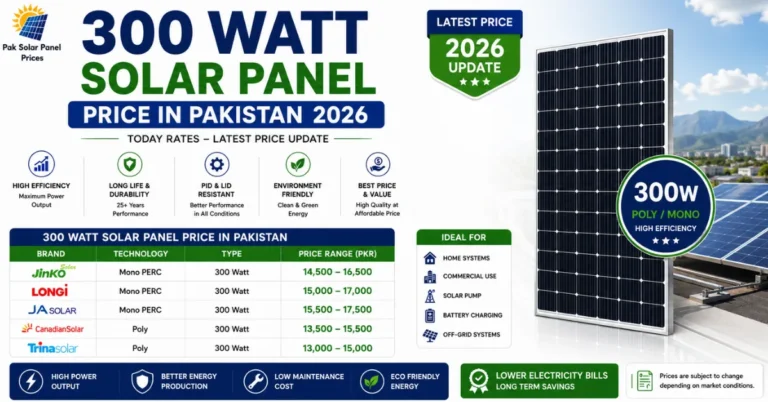
Read More: 300 Watt Solar Panel Price in Pakistan 2026 – Today Updated Price List
Why Buy a 180W Solar Panel?
180watt solar panels are made for electricity needs that are not too high. The 180w solar panels may prove to be beneficial when one wants to have solar energy for basic purposes other than supplying energy to the whole house.
Common applications include:
- Small lighting systems
- DC fans
- Battery charging
- CCTV cameras
- Wi-Fi routers
- Mobile charging
- Small electronic equipment
- Remote solar installations
What Can a 180 Watt Solar Panel Run?
A 180W panel is best suited for light, essential loads rather than full home backup. Typical uses include:
Can a 180W Panel Charge a 12V Battery?
Yes, a 180W solar panel can be used with a 12V battery when the complete system is correctly configured.
The panel’s operating voltage is generally higher than the battery’s charging voltage, which is why a suitable solar charge controller is required.
The controller should be checked for:
- Maximum PV voltage
- Maximum charging current
- Supported battery voltage
- Maximum solar input power
- Battery chemistry compatibility
Factors That Affect 180 Watt Solar Panel Price
- Cell Technology – Monocrystalline panels are more efficient and cost more than polycrystalline ones.
- Brand and Origin – Imported panels with proper certification (IEC standards) cost more than local/unbranded units.
- Grade (A-grade vs B-grade) – B-grade panels have minor cosmetic flaws and are cheaper, but slightly less durable.
- City and Dealer Margins – Prices can differ between Karachi, Lahore, Islamabad, and smaller cities due to transport and dealer overhead.
- Import Duties and Taxes – Government tax policy on imported solar equipment directly affects retail prices.
- Demand Fluctuations – Prices tend to rise during peak summer months when demand for solar spikes.
180 Watt Solar Panel vs Other Popular Panel Sizes
| Panel Size | Best For | Approx. Price (PKR) |
|---|---|---|
| 100W | Very small loads, single fan/light | 5,000 – 6,500 |
| 180W | Light home use, small pumps | 8,500 – 11,500 |
| 330W | Partial home backup | 14,000 – 17,000 |
| 550W+ | Full home/commercial systems | 22,000 – 30,000 |
If your goal is to reduce your electricity bill significantly rather than just running a few lights and fans, it’s usually more cost-effective per watt to invest in a 330W or larger panel instead of stacking multiple 180W units.
Read More; 350 Watt Solar Panel Price in Pakistan 2026 | Latest Today Price List
Tips Before Buying a 180 Watt Solar Panel
Is a 180 Watt Solar Panel Worth It in 2026?
For someone who only needs to run a couple of fans and lights during load-shedding, or power a small off-grid setup, a 180W panel is an affordable entry point into solar energy. However, if your main goal is to meaningfully cut your monthly electricity bill, pairing a larger panel size with an inverter and battery will give you better long-term value per rupee spent.
Installation and Maintenance Cost of a 180 Watt Solar Panel
Buying the panel itself is only part of the cost. To actually use a 180W panel, you’ll also need a few supporting components:
| Component | Approx. Price (PKR) |
|---|---|
| Mounting stand/frame | 1,500 – 3,000 |
| Charge controller (PWM/MPPT) | 1,500 – 4,500 |
| Wiring, MC4 connectors, earthing | 1,000 – 2,000 |
| 12V battery (if backup needed) | 12,000 – 25,000 |
| Basic installation labor | 1,000 – 2,500 |
Conclusion
A 180 watt solar panel remains one of the most budget-friendly ways to start using solar energy in Pakistan, with prices typically falling between PKR 8,500 and 13,000 depending on grade, brand, and where you buy it. It’s a practical choice for running a fan or two, a few lights, or a small battery-based backup setup but it isn’t designed to replace your full grid electricity usage. Once you factor in a charge controller, wiring, and an optional battery, your total setup cost will be higher than the panel price alone, so it’s worth budgeting for the complete system rather than just the panel itself. If your goal is bigger long-term savings on your electricity bill, consider stepping up to a 330W or larger panel, since larger sizes generally offer a better per-watt value. For most buyers, though, a 180W panel is a solid, low-risk first step into solar power.
FAQs
What is the current price of a 180 watt solar panel in Pakistan? Prices generally range from PKR 8,500 to 13,000 depending on brand, grade, and city.
Can a 180W solar panel run a fan and lights? Yes, it can comfortably run 1–2 fans and a few LED lights, especially when paired with a small battery.
Is a 180W panel enough to reduce my electricity bill? It can offset a small portion of your daily usage, but for a noticeable reduction, a larger system (330W+) is recommended.
Which is better, monocrystalline or polycrystalline 180W panels? Monocrystalline panels are more efficient and durable but cost slightly more per watt than polycrystalline options.
Do 180 watt solar panels come with a warranty? Branded A-grade panels typically include manufacturer warranties (often 10 years or more), while local/unbranded panels may not.
 Join Channel